What a billion dollars buys an agent that charges nothing
Instinct is reported to be raising $1 billion at $10 billion and publishes no price, no provider, no unit of usage. 14 agents here publish a unit; one, tokens.
Instinct is reported to be raising $1 billion at a $10 billion valuation, four times the number it confirmed on 26 August and fifty times the one reported for the spring. It publishes no price, no model provider and no unit in which a user's usage is counted, and the product people run beside it, Muse, publishes all three. The reported round is what it costs to publish none of them.
What is reported, and what is confirmed
The company has confirmed one figure: $350 million raised in total at a $2.5 billion valuation. That was a $250 million Series B co-led by Index Ventures and Benchmark, announced on 26 August 2026 with a line from its founder about road trips and groceries and a wedding. Bloomberg's syndicated report of the same round put the valuation in the spring at $50 million.
The $1 billion is The Information's, reported on or about 10 September: talks to raise about $1 billion at about $10 billion, with Sequoia and Benchmark in talks to lead, the founder declining to comment. The same report, as relayed by the outlets that re-ran it, carries four more claims. More than 100,000 users on an invitation-only beta. Users notified that the service is "operating at full capacity and responses may be slower". A founder who "doesn't want to charge users", with advertising named as the alternative. And a product that runs mostly on open-source models on rented servers, pitched to investors with a plan to own chips and data centres one day. None of it is the company's. Instinct's own site says one thing about what runs it, that its "core model is trained to understand and handle the deeply personal nuances of everyday life", and nothing about price, capacity or speed.

Sheel Mohnot
Instinct looking to raise $1B, potentially at a $10B valuation. Compute costs are high and Noah doesn’t want to charge users for the product. Instinct has raised $350M to date, mostly uses open source models and wants to own chips and data centers
The listing here records $350 million at $2.5 billion and will record the next number when the company says it.
What the directory can add
This directory reads every product's pricing page and records the unit it meters usage in, because the unit says where the compute bill lands. 14 of the 82 agents publish one. 7 meter in credits, a unit the company defines and can re-price; Beside, Howie, Lindy, Notis, Predicts, Town and Wajo. Four meter in messages, folk at twenty a day and Ollie at fifty a month among them. The rest count tasks, proactive actions, job applications, minutes of calls, or a daily cap the page does not size.
One meters in tokens, which is the unit the bill from the model provider arrives in. It is Muse. Meta's chief executive said the free tier runs to 100 million tokens a week; a user's upgrade sheet, matching CNBC's report, showed Power at $20 a month for 500 million and Maximum at $100 for 3 billion. Meta's own page names no figure, so those numbers sit on the listing as a chief executive's word and a screenshot. But they are numbers, in the currency the cost is paid in.
A user who priced the free tier put the machine behind it at two cores, eight gigabytes and a hundred gigabytes of disk, roughly $40 to $50 a month at retail before a single token, and called it a loss leader. On 19 September a sector analyst did the same sum with a smaller disk and three clouds and landed at $30 to $60. Neither figure is Meta's; both are the only public arithmetic on what a free agent costs to host.

Greg Ceccarelli
This is definitely _their_ bet. I was playing with Muse last night (its a very well designed product) and thinking about the economics. Right now, you get a 2vcpu, 8 gig ram, 100gb disk linux machine FOR FREE. While it idles when your agent is not in use, retail rates for an equivalently sized droplet or vultr box is ~$40 - $50 per month. This doesn't include the AI usage you get as well. Their two other paid plans for additional usage are $16 and $80 per month respectively which are cheapo. This loss leader approach is how meta clearly anticipates taking on GrokBok and Instinct, etc. The big question is will consumers bite?
 Muse
Muse| Agent | What it publishes | Read |
|---|---|---|
| Meters in tokens 1The unit the compute is billed in. | ||
| Muse | Its chief executive said free up to 100 million tokens a week. | 2026-09-11 |
| Meters in credits 7A unit the company defines. | ||
| Beside | 1,000 free credits to start, roughly twenty quick asks or one standing watch. | 2026-09-10 |
| Howie | $25 a month for a shared team workspace, priced in credits rather than seats: the same $25 buys anywhere from 1,250 to 150,000 credits a month depending on tier, with teammates unlimited on every one. | 2026-09-10 |
| Lindy | Plus $29.99/month per user for 3,000 credits, Pro $99.99 for 15,000, Max $199.99 for 35,000, Enterprise on request. | 2026-09-10 |
| Notis | Seven-day trial on any paid plan with $20 of usage credit. | 2026-09-10 |
| Predicts | Free with 1,000 credits and one market watched daily, then Starter at $10, Plus at $25 and Pro at $50 a month, buying 1,000 to 5,000 credits and two to ten standing watches checked as often as every five minutes. | 2026-09-10 |
| Town | Credits are included with each tier and overage is pay as you go. | 2026-09-10 |
| Wajo | Paid in credits, unspent ones refundable. | 2026-09-15 |
| Meters in messages 2So many a day or a month. | ||
| folk | Free forever at 20 messages a day and two connected apps, then Pro at $8.33 a month billed yearly or $9.99 monthly, and Max at $66.67 a month billed yearly or $100 monthly. | 2026-09-10 |
| Ollie | Free $0 for 50 messages a month, Everyday $25/month for 150, Always-On $100/month for 1,000. | 2026-09-10 |
| Meters in something else 4Tasks, actions, applications, call minutes, a daily cap. | ||
| Airtap | Free while it is being built, with a daily usage cap. | 2026-09-12 |
| Bloome | Free to start with 10 applications, Pro at 39 euros a month for up to 900 roles judged and 70 applications, Ultra at 99 euros a month for 3,500 or more roles and unlimited applications. | 2026-09-10 |
| Espa | Free forever with one connected inbox, ten emails sent and ten tasks a month. | 2026-09-13 |
| Martin | $35/month limited proactive actions, $49/month unlimited | 2026-09-10 |
| Announced a round, publishes no price 15Nothing to meter in public. | ||
| Alfi | Not published. | 2026-09-10 |
| Boardy | Not published. | 2026-09-10 |
| brobot | Not published. | 2026-09-10 |
| Ditto | Not published. | 2026-09-10 |
| Eugene | Not published. | 2026-09-12 |
| Flip | Not published. | 2026-09-10 |
| Instinct | Not published. | 2026-09-10 |
| Iris | Not published anywhere on either of its sites. | 2026-09-10 |
| Lucas | Not published anywhere on the site. | 2026-09-10 |
| Miso | Not published. | 2026-09-12 |
| Orchid | Not published. | 2026-09-10 |
| Ori | Not published anywhere on the company site. | 2026-09-10 |
| Series | Not published. | 2026-09-10 |
| Tomo | Not published. | 2026-09-10 |
| Wis.ai | Not published. | 2026-09-12 |
26 listings publish no price. 15 of those have announced a funding round, which means fifteen companies have told investors a number and told users none. Instinct is one, and it is the only one of the fifteen reported at ten figures. 47 of the 82 name no company whose model runs them; Instinct is one of those too, and the one sentence on its site about a core model of its own reads against the report of open-source models on rented servers. Both can be true. Neither is published.
The speed record
Slowness is the one cost a free product cannot hide, and the head-to-head has it dated. On 8 September a user gave Muse and Instinct the same job and Muse had booked the dinner while Instinct was still searching for the RSVP. On 9 September a user running three assistants at once wrote that Instinct was shipping integrations quickly and slowing badly under demand, and that Town answered faster over iMessage. On 10 September a founder who gave both a restaurant to book wrote "muse got through all far faster", and went with Instinct anyway because it drove his own browser. The same week, per The Information, the company told its users that responses may be slower. On 18 September an investor's argument against the round, relayed by another, was five words long: "Instinct is slow. That is a sign of compute costs."

Harry Stebbings
Why I would not invest in the new Instinct round “This is the threat that every VC worried about, and we all got a hall pass since the start of AI because the LLMs did not build any apps. This is the one that they are building. Instinct is slow. That is a sign of compute costs. That is why they have to raise $1BN. I worry when the incumbent has infinite capabilities here and wants to build the app. That is why I would say no, but I might be wrong.” @jasonlk Love to hear your thoughts @FundamentEdge @wailord @pranavreddy @nabeelqu
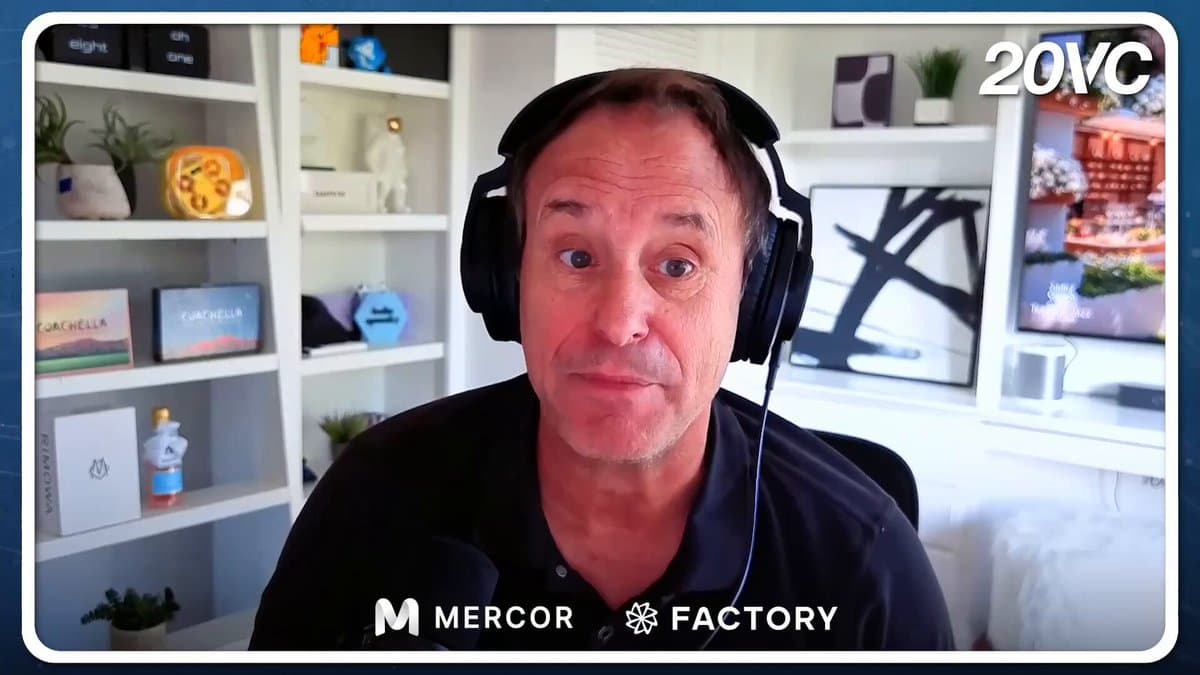 0:53 video
 Instinct
Each of those is one person's afternoon, and the site records them as that. Together they are the only public measure of what a free tier at 100,000 users costs, and the measure is time.
The case for charging nothing
The argument for the round is on the same wall, from a venture investor who uses the product daily and says he has bought thousands of dollars of things through it, some of which it offered before he asked. His three ways it could charge: a paid tier for people like him, team features around the agent-to-agent channel priced the way Slack prices history, and a cut of what the agent buys once it is the way you reach the internet. The third is the one the reported plan points at, and it is the one that needs the most users, the most compute, and the longest wait.

Jesse Middleton
Been thinking about this a lot as a self-described agent power user: 1. I think they could absolutely charge for a premium tier. Keep it free for a long time for the masses but just charge for the power users. I certainly would fall in that group today. Even if a small percentage buy, it's probably worth a lot of money. 2. You can imagine them charging for team features, not necessarily enterprise or even business, but just groups that want to be able to work together. They're launching this instinct-to-Insticnt communication channel. I could totally imagine you having a limit on the amount that you can do on there, a little bit like Slack does: charge for history and other functionality for people that want to be multi-user. Again, network effects and more of a premium experience. 3. If you can make this a daily always-on habit and it replaces your gateway to the internet (such as you move from Google to here), I think there's a relatively simple path to economic upside through either some form of advertising (which obviously ChatGPT wanted to experiment with but hasn't been figured out yet) or simply economics on purchases and decisions. I've likely purchased thousands of dollars so far through instinct alone, some of which I've chosen and asked for and some of which it's offered to me. There's a payment gateway question here and a referral question here, both of which could be substantial. These are just a few ideas that I could imagine them going after but I think if compute continues to drop for inference, this is not necessarily the worst game plan today.
A user's own valuation of the product, at five to ten thousand dollars a month, is on the wall beside it. The company charges nothing.
What is not known
What a user costs Instinct in a week, in tokens or in anything. What the round is for, beyond a relayed pitch about chips. Whether it closes, at what number, and with whom. Whether the "core model" on the site is the model that answers, or a layer over the open-source ones the report describes. Every one of those is paywalled, second-hand, or unsaid, and this piece does not guess at any of them.
What to watch
Whether one of the 15 funded listings with no price publishes one, and whether it is this one. Whether a second listing prices in tokens, which would make Muse's tiers a norm rather than an exception. And whether Instinct names the company whose model runs it, which would be the first sentence about its compute that a user could read.