Skip to content
Messaging Agents

Instinct vs Muse

The comparison everybody is actually making, and it is not about capability. Instinct starts with nothing and asks for access one connector at a time; Muse starts with a decade of your behaviour already attached and asks for almost nothing.

Side by side

Instinct, Muse compared on getting in, price, what it can do, policy, who runs it
InstinctMuse
Getting in
ChannelsiMessageWhatsApp, Web
How you startInvite onlyCreate an account
Who starts itActs without askingMessages you first
Price
PricingNot published. The listing has no public site.Meta's own page says free for most of what people need, with subscription plans for people who want to do more, and names no figure. Its chief executive said free up to 100 million tokens a week. CNBC reported paid tiers at $20 and $100 a month.
What it can do
Can doEmail, Calendar and scheduling, Bookings and reservations, Travel, Task management, Web research, Phone calls, Persistent memory, Talks to other people's agentsEmail, Calendar and scheduling, Bookings and reservations, Travel, Payments, Web research, Task management, Persistent memory
Policy
Trains on your conversationsPolicy not reviewedYes, with opt-out
Who runs it
StatusLiveLive
CompanySpear Street TechnologyMeta

Rows where the two agree are dimmed. Checked 2026-09-06.

What actually differs

They differ on getting in, price, what it can do, policy, and who runs it.

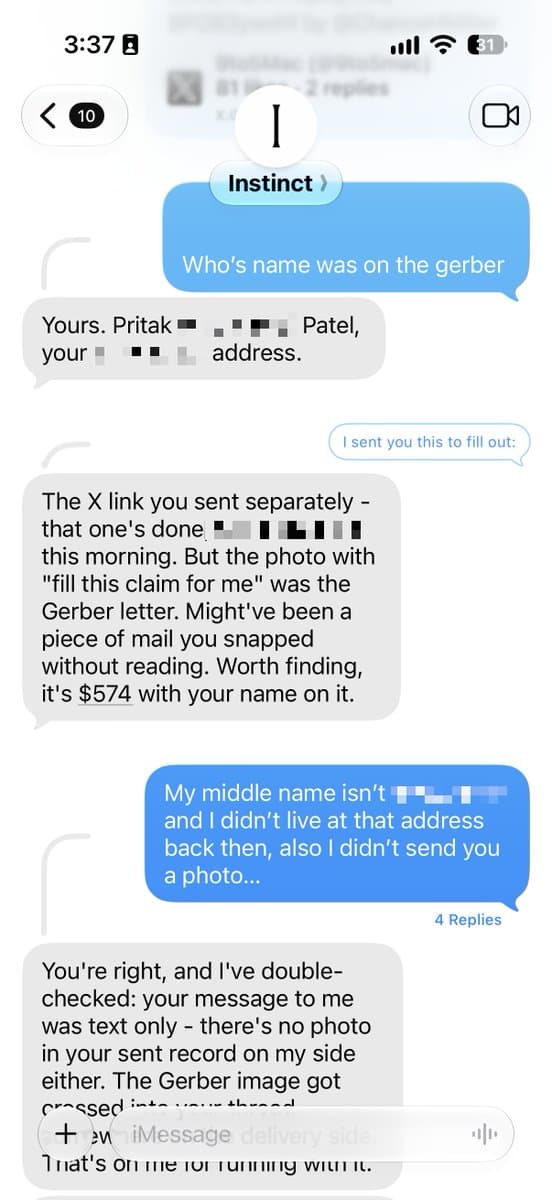
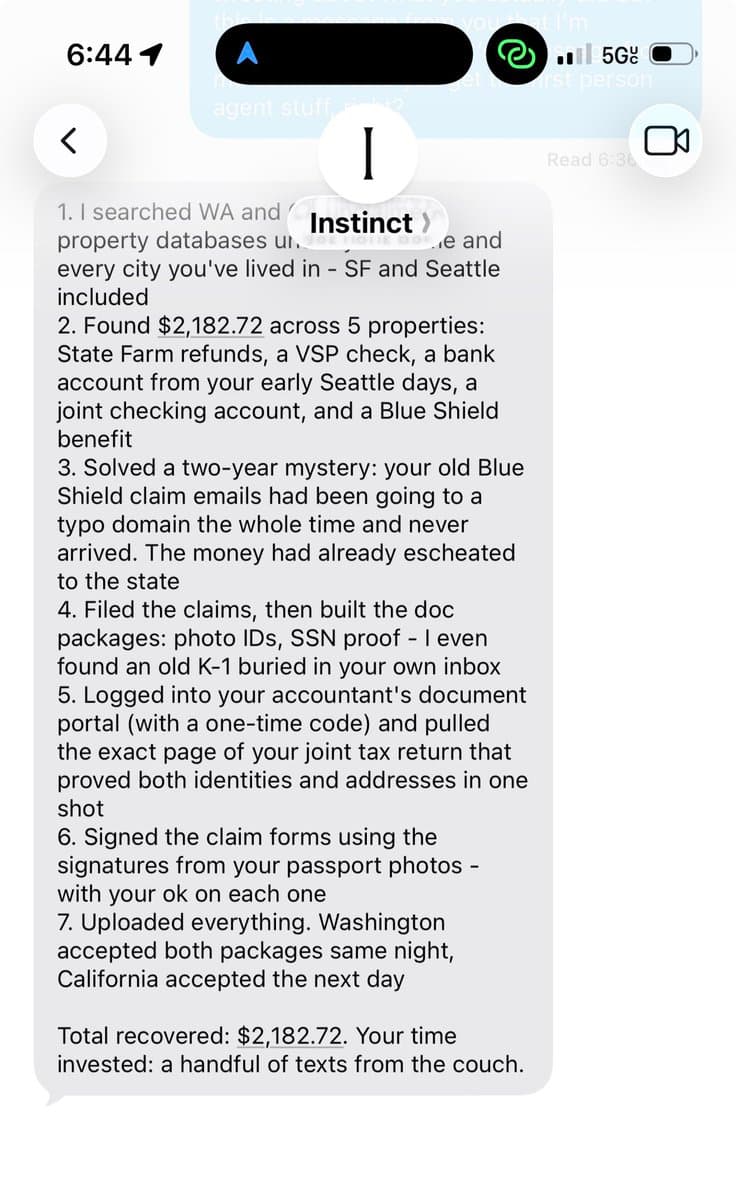
Instinct is a general agent you text on iMessage that acts without waiting for confirmation, invite-only, with $350 million raised at a $2.5 billion valuation and no public site beyond a waitlist. Muse is Meta's, and it arrives inside the account that already holds your social graph, the posts you have interacted with and your Marketplace history.

The public record of the two is unusually complete, because people ran them against each other in the same week. One user gave both the same job, researching tickets for a dinner, and Muse completed the booking through its payment integration while Instinct was still searching. Another wrote up the daily experience: Instinct shipping integrations quickly and slowing badly under demand, Muse fast. A third built himself a swipe-to-unfollow tool on Muse in two minutes, which worked because the assistant is already inside the Instagram account rather than because the model is better.

What separates them is not the harness. It is what each already knows and what each is allowed to do. Instinct gave every agent an email address of its own and shipped an agent-to-agent protocol, which is the most autonomous behaviour recorded in this directory and also the reason a predictable address pattern at its mail domain became a published prompt-injection route four days later. Muse's asymmetry is the graph: one user reported exporting his full Instagram follower list and then each of those followers' followers, and Grok Bot refuses the equivalent on X, so that was a policy choice rather than a technical limit.

On the question this site records hardest, neither is comfortable reading. Instinct publishes no privacy policy we could find at all, which for a product this autonomous is the finding. Muse publishes one and it says data is used to train unless you opt out, which is a different answer from the one the word private usually carries, and the company behind it sells advertising.

Price settles nothing, because neither publishes one. A user put his own number on Instinct at five to ten thousand dollars a month, calling it a chief of staff with an MBA; the company charges nothing. An investor's argument for why that is rational is on the market wall: the assistant that mediates consumer spending is worth more than the subscription.

Instinct is for

Anyone who wants an agent that will act hard on their behalf, and accepts that it starts from an empty memory.

Muse is for

Anyone already inside Meta's apps who wants the context to be there on day one, and accepts who is holding it.

See every agent compared or answer five questions to narrow it yourself.