

 Muse
Muse


dp
@dpfebo · 2026-09-15
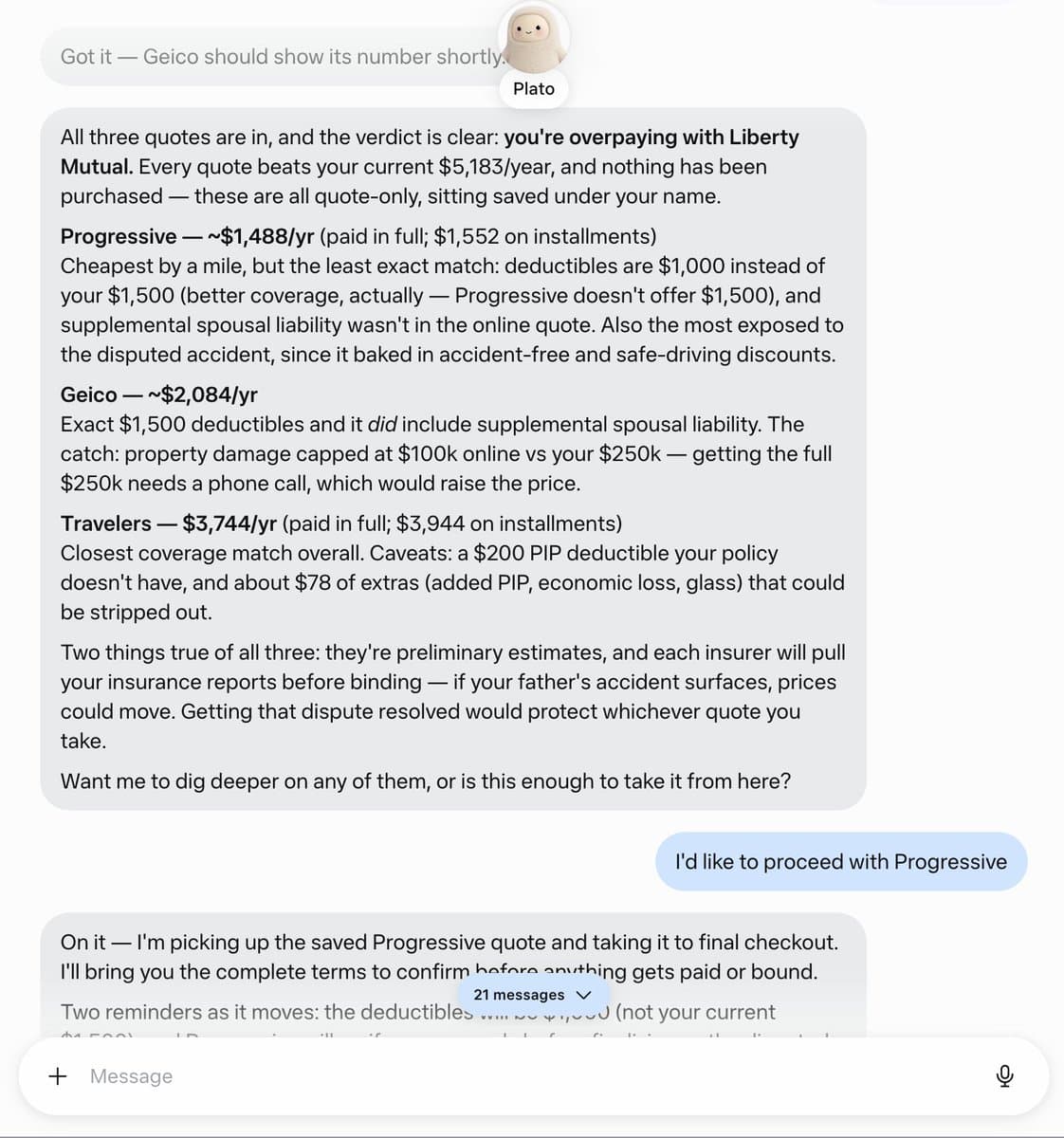
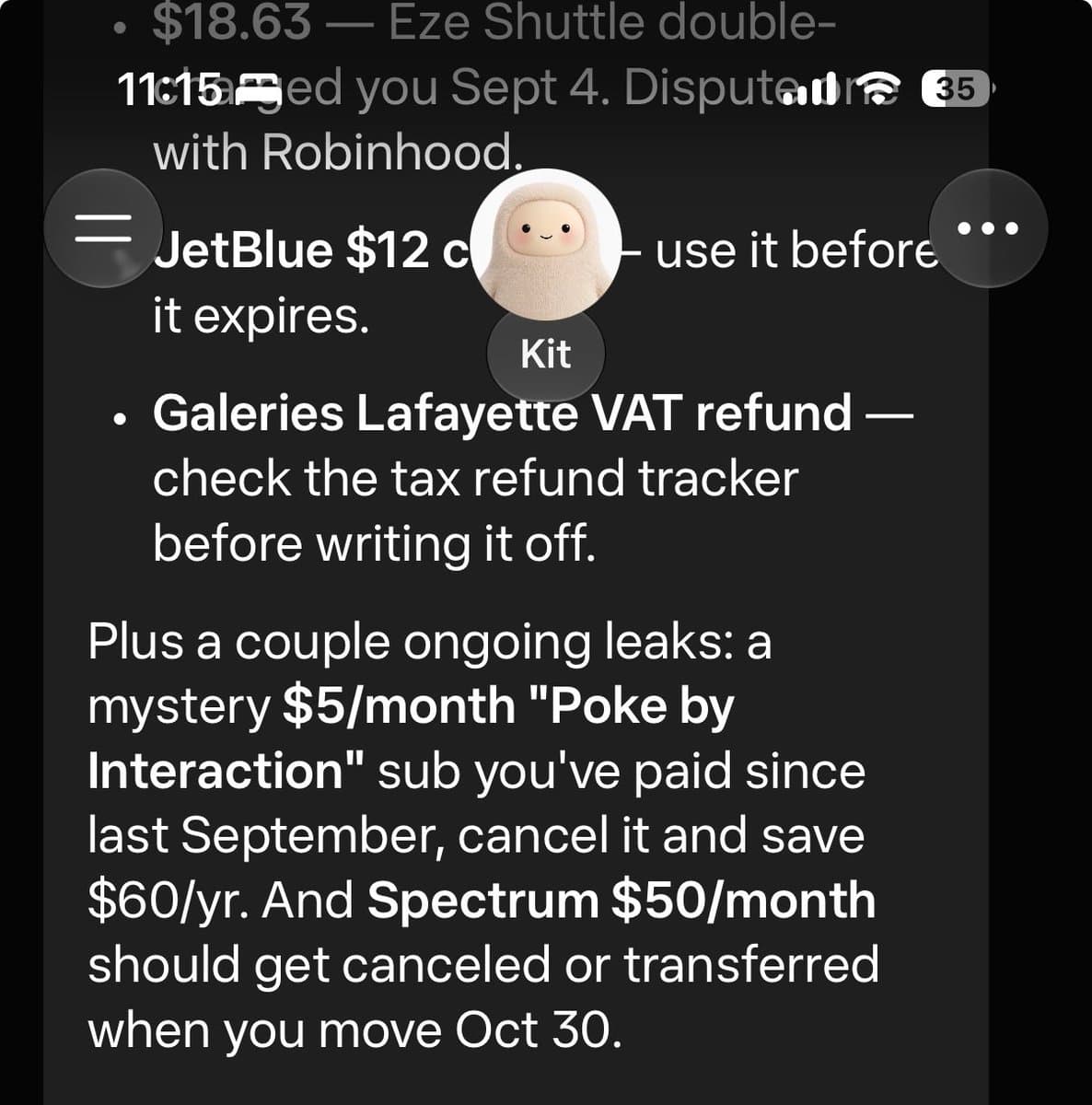
i asked @Muse to find me ways to save money and it singled out my $5/mo Poke sub to cancel LOL. i thought ppl were lying
The axis is who let them in. Poke is the only independent agent Apple approved onto Messages for Business, a programme that is customer-initiated and closed to new partners. Meta did not need approval for WhatsApp, because Meta owns WhatsApp.
Muse is for
Anyone whose messaging life is WhatsApp, who wants the default that arrives already inside it.
Poke is for
Anyone on iMessage who wants the blue bubble through the one route Apple actually sanctions.
Meta's personal agent, reachable inside WhatsApp, running on a cloud computer of its own
The first independent third-party agent approved on Apple Messages for Business
They differ on getting in, trust and who runs it; a dot marks each row where they do.
| Muse | Poke | |
|---|---|---|
| Getting in | ||
| Where do you text it? | WhatsApp, Web. | iMessage, WhatsApp, Telegram. |
| How do you start? | Create an account. | Create an account. |
| Does it work on Android? | Yes, over WhatsApp, Web. | Yes, over WhatsApp, Telegram. |
| Is there an app to install? | Optional app: an app exists but is not how you start. | Optional app: an app exists but is not how you start. |
| Who starts the conversation? | Messages you first. | Messages you first. |
| Price | ||
| What does it cost? | Free to start, with paid tiers. | Free to start, with paid tiers. |
| Trust | ||
| Does it train on my messages? | Yes, with opt-out. | Yes, with opt-out. |
| What does it hold to log in for me? | Holds a surrogate, never the secret for connected accounts; a security contact is published. | Holds what it does not say; no security contact published. |
| What happens to my messages? | Carried by Meta. | Carried by Linq. |
| Does it publish about its security? | Yes, a page of its own. its page | Nothing published. |
| Can it phone people? | It does not call. | It does not call. |
| Who runs it | ||
| Who is behind it? | Meta, Menlo Park; funded. | The Interaction Company of California, acquired by Cognition, Palo Alto; funded. |
| How is it funded? | Publicly listed company, no venture round | $25M total: a $15M seed led by General Catalyst at a reported $100M valuation on launch day, then $10M in April 2026 co-led by Spark Capital and General Catalyst at a $300M post-money valuation. Acquired by Cognition in July 2026 for an undisclosed sum. |
| What it can do, on its own pages | ||
| Bookings and reservations | Yes | Not stated |
| Payments | Yes | Not stated |
| Persistent memory | Yes | Not stated |
| Writing code | Yes | Not stated |
| Reminders | Not stated | Yes |
| Both | Email, Calendar and scheduling, Travel, Web research, Task management. | |
71 public posts of either agent doing a specific thing for somebody, counted by the job; each is on the listing with the post behind it.
| Job | Muse | Poke |
|---|---|---|
| Something you are owed | 30 | 0 |
| Booking | 14 | 0 |
| Buying | 13 | 0 |
| Research | 6 | 0 |
| Your inbox | 5 | 0 |
| Reminders and follow-up | 2 | 0 |
| Group coordination | 1 | 0 |
Every dollar figure somebody attached to a post about either agent. The figures are theirs, unverified, and never added up here.
1 post about one of them that name the other.
These two are the only agents in this directory that reached a major messaging platform with the platform's blessing, and they got it in opposite ways. Poke was approved onto Apple Messages for Business as the first independent third-party AI agent, on a programme that is invite-only, closed to new partners and customer-initiated by design. Muse arrived in WhatsApp on launch day with no approval to seek. That difference is not a feature either can add later, and the rest follows from it.
Every other WhatsApp agent in this set works inside Meta's business messaging rules: outbound starts from pre-approved templates, free-form replies only inside a window after you write first. Muse describes itself as able to message you without being prompted. Whether the rule simply does not apply to the platform owner is unanswered, and it is the most consequential open question on that channel. Poke, on Apple's programme, texts you first only once you have opened the thread.
Both publish a free tier and both charge for more. Poke names its numbers, $19 and $199 a month; Meta names none on its own page.
Both say your conversations train a model unless you turn that off. The difference is not in that row: one of these companies runs an advertising business, and its own security write-up gives the example. Ask Muse to buy a shirt from a designer's site, and that designer may use the visit to show you an ad on Instagram.
Poke's parent was acquired by Cognition in July 2026, and the buyer says nothing changes through the end of 2026. Muse launched on 8 September 2026 inside a company that will still exist next year.
Poke's advantage is the channel it is in: on an iPhone, in a country where iMessage is the default, an agent that shows up as a blue bubble is a different product from one that lives in an app you install. Muse's advantage is that it did not have to ask anyone, and it never will.
“That's the most careful consumer agent sandbox I've used.”
“Generally impressed that you can just do anything - it's not limited or watered down like I would have imagined”
“So Meta hands every Muse user a free server. Who else is willing and able to do such a thing!?”
See every agent compared or answer five questions to narrow it yourself.