Lauren Forristal, TechCrunch
Our research · 2026-10-03
“Rather than downloading another app, a growing number of agents can simply be texted like an ordinary person.”
The argument about whether anything here has a moat, and whether the company with two billion people already in its app has to build a better product or merely a good enough one. Nobody in it is neutral, and each post says who is talking.
Lauren Forristal, TechCrunch
Our research · 2026-10-03
“Rather than downloading another app, a growing number of agents can simply be texted like an ordinary person.”
Kush Thakker and Tharun Anandh, Brace
Our research · 2026-10-01
“Out of the 456 people who asked for Instinct, only 31 posted about using it in the days that followed.”

Jenny Xiao 🌌
@jennywxiao · 2026-09-28
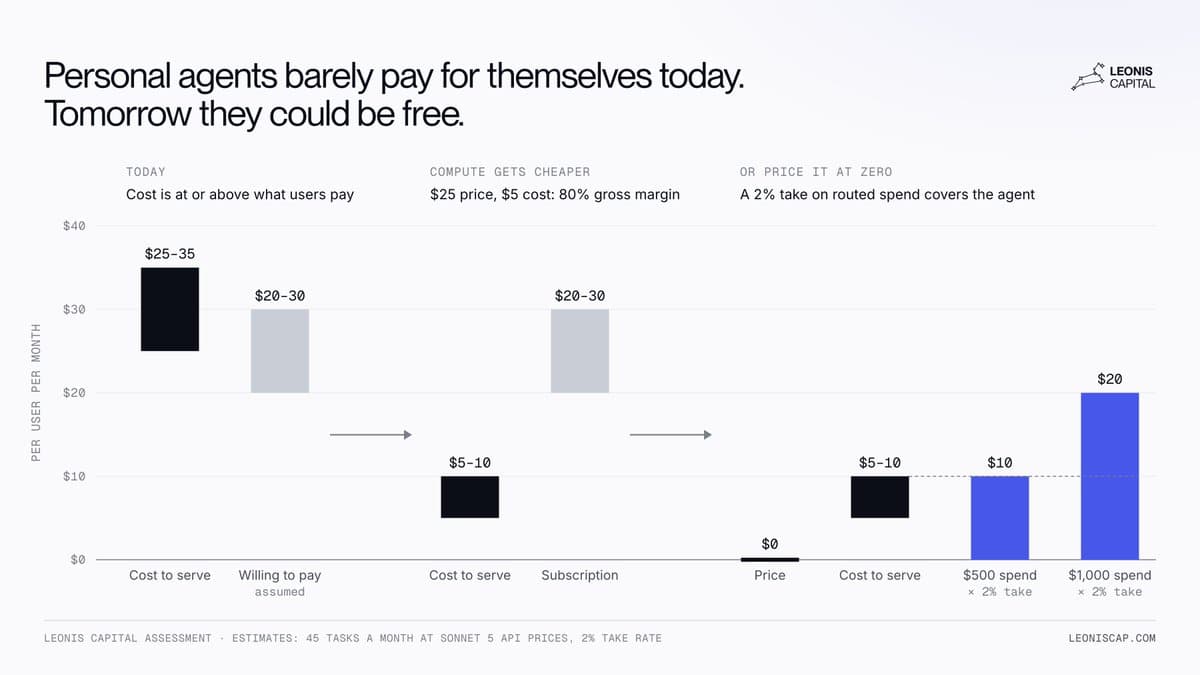
Instinct raised $1B at a $10B valuation just weeks after launching. Personal AI agents have a weird economic problem. They are expensive to run precisely because they're useful. Our rough estimate for an actively used personal agent today is ~$25–35/month in direct technical cost, with heavy users potentially costing far more. Yet consumer willingness to pay for software still seems anchored around something like $20–30/month. That's not a great business. But the economics could change very quickly. If cheaper inference + better models bring the same user's cost down to ~$5–10/month, Instinct has two options: 1. Keep charging $20–30/month and become a very high-margin subscription. Or, 2. more interestingly: make the agent free. Because an agent that books your hotels, restaurants, groceries, travel and services also controls distribution. If Instinct influences $1,000/month of a consumer's purchases, even a 1–2% effective merchant/transaction take rate is worth $10–20/month. Which leads to a strange possible end state where $0 consumer subscription + $5 agent cost + $10–20 distribution revenue The agent becomes free because the valuable asset isn't the software, it's the purchasing decisions flowing through it.

anu
@anuatluru · 2026-09-28
A few thoughts on Instinct (been waiting for consumer AI): - Simplicity is clearly the north star (a prestige product philosophy, Apple-esque) - This is the new interface for commerce, and likely where all their money gets made. - Invite-only consumer growth naturally draws Clubhouse comparisons. It’s a good proxy for the Silicon Valley story arc, but far more solo utility and less social/media network - We’re still deep in unlocking personal superpowers via AI, long phase of tool before network (fits my “Self is the Platform” AI thesis from last yr) - And yet, this could be the first multiplayer consumer AI product to truly scale. ‘Trusted Person Network’ is a great use case and starts with family & close friends, like Life360 (what I’ve called Social Utilities). - Meta is coming, OpenAI will too … and new devices will enter the mix, but hardware is hard and it’ll be hard to beat iPhones anytime soon - Instinct will try to stay free, personality-agnostic, and low gooner / gambling index, which is good for a very mass utility play (also fits the prestige philosophy) - High EQ founder, a good signal for adapting to users, competing, fundraising, and media interviews … - Paradigm novelty is underrated for hiring. Many people want to work on the original new thing more than on copycats, so hiring shouldn’t be hard even at steep valuations, now $10B . - The first tweet from Noah that caught my eye was when he said there are no new interfaces. I 95% agree with that, and have been bullish since …

Freda Duan
@FredaDuan · 2026-09-27
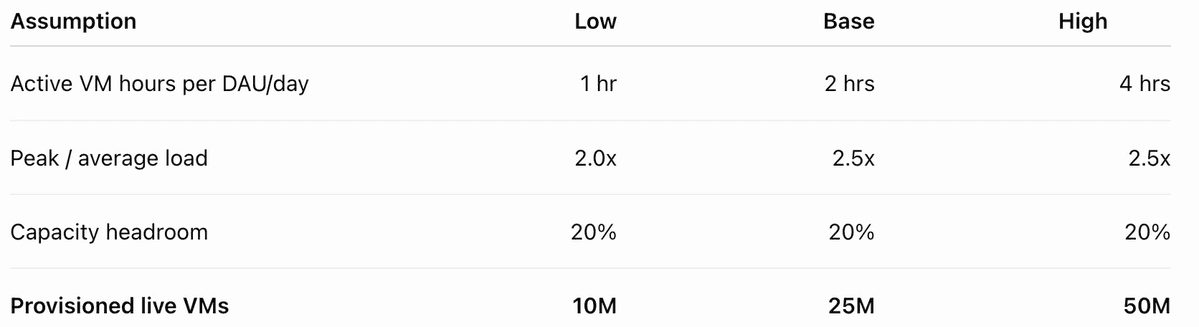
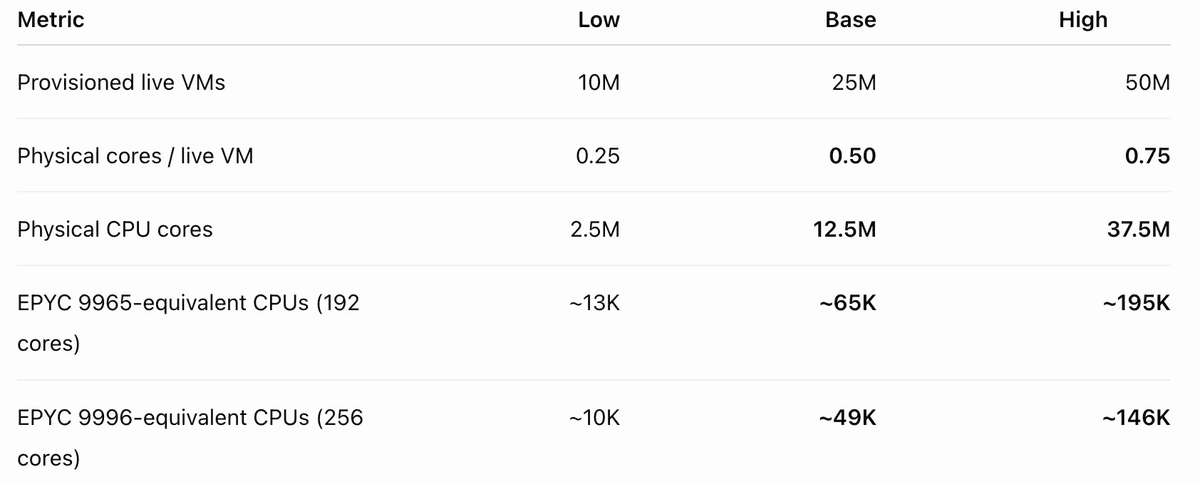
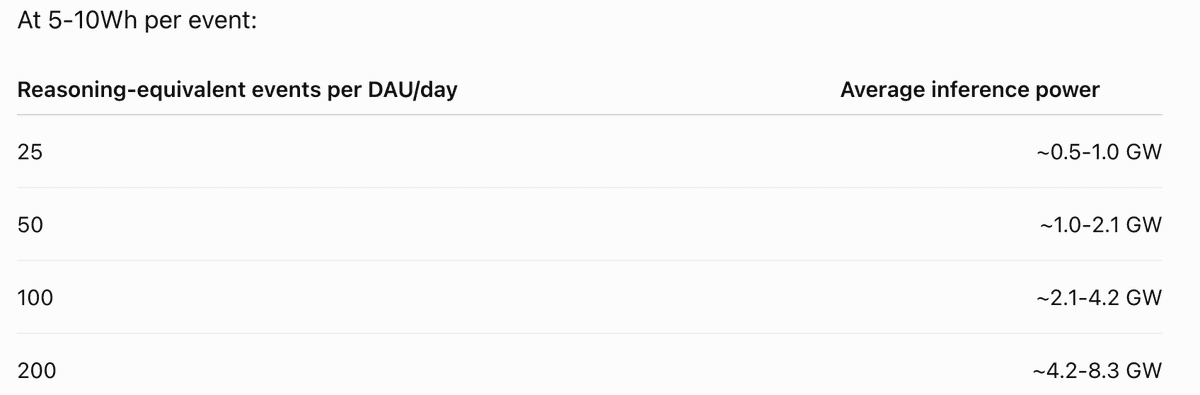
A humble attempt to est. the infra required to serve 100M DAU @Muse Rough conclusion is: 1 GW of power to serve 100M DAU in the base case, of which only ~0.1 GW comes from the CPU/VM layer. Depending on the # of reasoning-equivalent model calls one Muse DAU generates per day, 3-4GW is entirely plausible. Maybe that’s why @Meta is rumored to be adding 7-10GW of compute next year. The sandbox layer = sub $1B of CPU content and ~$2B of DRAM content, which is much smaller than many expected. Lot of moving assumptions. Welcome all feedbacks/ pushbacks. ------ Two very different pieces of infrastructure behind Muse. 1. Muse VM / sandbox infrastructure 2 vCPUs, ~8 GB of RAM and ~100 GB of persistent logical storage per user. https://www.starkinsider.com/2026/09/meta-muse-specs-what-it-runs-on.html 2. Muse Spark inference Model inference goes out through Meta's external inference infrastructure. https://research.meta.ai/blog/security-and-safety-for-ai-agents-our-approach-with-muse ------ 1/ Sandbox infrastructure A. CPU The first mistake is assuming that 100M DAU means 100M VMs are actively consuming compute at the same time. Suppose the average Muse DAU has an agent actively working for two hours per day. 100M users * 2 hours / 24 hours = ~8M average simultaneous active VMs Meta obviously cannot provision only for the daily average. Usage will be concentrated during waking hours and bursty. Assume a 2.5x peak-to-average ratio: 8M * 2.5 = ~20M peak active VMs Then add roughly 20% capacity headroom: ~25M provisioned live VMs. So the base assumption is effectively that Meta needs enough infrastructure to support roughly 25% of DAU being live simultaneously. The next important distinction is between virtual CPU allocation and physical CPU demand. Agent sandboxes are particularly well suited to CPU oversubscription. They spend a lot of time waiting. During those periods, the VM may still be alive, but it is barely using CPU. DeepSeek’s recently published DSec infrastructure provides a useful benchmark. Its production agent sandbox platform runs approximately 30,000 physical CPU cores and 250TB of DRAM across ~160 nodes, with peak concurrency above 380,000 sandboxes. https://arxiv.org/abs/2609.22978 DSec also demonstrates stable operation at around: 800 microVMs per node. With roughly 188 physical cores per node: 188 physical cores / 800 microVMs = ~0.23 physical cores per live VM. DeepSeek is obviously the King of efficiency. The number for Muse might be at 0.3-0.75 physical cores per live VM, or assume 0.5 physical cores per live VM as the base case. That is equivalent to roughly two simultaneously live Muse VMs per physical CPU core. Using the base assumptions: 25M live VMs * 0.5 physical cores per VM = 12.5M physical CPU cores. On a 256-core CPU: 12.5M cores / 256 cores per CPU = ~50K CPUs; Or on a 192-core CPU that would be 65K CPUs. At the current public pricing, that is ~$800M. B. DRAM CPU can be aggressively oversubscribed because a VM that is waiting may consume almost no CPU. Memory is harder to oversubscribe because a live VM still needs to retain its working state. Muse exposes roughly 8GB of RAM to the user environment, but one observed instance was actually using only around 3GB at the time of measurement. 25M live VMs * 3GB = 75PB of physical DRAM, call it ~75-100PB of physical DRAM feels like a reasonable base range. At the current public pricing, that is ~$2B. C. Sandbox power ~0.1 GW for the entire Muse sandbox / VM layer at 100M DAU. ------ 2/ Inference Muse’s personal computer executes tools and stores state locally, but the actual model runs on separate inference infrastructure. Meta’s Muse architecture Energy per inference event Microsoft’s 2026 study estimates that optimized frontier-scale inference consumes a median of approximately: 0.31Wh per normal query But a long reasoning query with roughly 15x the token count consumes approximately 13x as much energy, or around: 4Wh per long reasoning query The study specifically highlights reasoning and agentic workloads as significantly more energy intensive. https://www.microsoft.com/en-us/research/publication/energy-use-of-ai-inference-efficiency-pathways-and-test-time-scaling/ Sensitivity analysis on # reasoning-equivalent events per DAU per day Suppose each active @Muse user generates the equivalent of 50 heavy inference events per day. At 5Wh each: 100M users * 50 events/day * 5Wh = 25GWh/day 25GWh/day / 24 hours = ~1.0GW average power So inference alone could require: ~1-2GW of average power A 3-4GW Muse is entirely plausible. Maybe that’s why @Meta is rumored to be adding 7-10GW of compute next year. ------ The popular framing around Muse is that giving every user 2 vCPUs and 8GB of RAM creates an enormous CPU requirement. But the naive calculation materially exaggerates the CPU requirement because it treats logical VM allocation as dedicated physical infrastructure. The more interesting conclusion is: Consumer agents may be a meaningful new demand driver for CPUs and conventional DRAM, but inference remains the real compute bottleneck. And as agents do more work, run longer trajectories and increasingly spawn other agents, inference demand can scale much faster than the number of users itself. +++ Calling my peer review group: @bubbleboi @damnang2 @Midnight_Captl @FundaAI @fi56622380 . Feedback/ Pushbacks pls :). ++ Better formatted: https://robonomics.substack.com/p/agent-muse-compute-demand?r=3hcp4&utm_campaign=post-expanded-share&utm_medium=web

Alexandr Wang
@alexandr_wang · 2026-09-24
MUSE DEVICE ALERT: muse charm, the easiest way to use muse that fits on your keychain. shipping in dec in time for the holidays 🎄


Andrew Freedman, CFA 🦅
@HedgeyeComm · 2026-09-19
I still think investors don’t fully appreciate what @finkd and @alexandr_wang are doing here... Looks like $META @Muse gives every user their own agent running on 2 CPUs, 8 GB RAM, 7.5 GB disk. I priced the equivalent box from GCP, Azure and AWS… somewhere between $30-60/month. So Meta hands every Muse user a free server. Who else is willing and able to do such a thing!?

Liz Wessel
@lizwessel · 2026-09-19
I was fully on the instinct train for the first 2 wks… but since trying Muse, Ive switched over almost completely. I’d still give more access to Google than anyone else, but until G launches an assistant, I guess Im on the Muse train. Or until the next better thing comes along..

Kevin Rose
@kevinrose · 2026-09-18
Google needs to buy Instinct, they need that product DNA, Notebook isn't going to cut it. Instinct, Muse, Grok Bot, etc., are social ai. I've seen this play out before... I was at Google+ for 3-months running mobile, I tried buy instagram but I was two steps down from Larry, so I didn't have the pull (Kevin had told me Zuck was sniffing around), my SVP said it was 'too expensive.'.. killed me. I bounced to Google Ventures.

Linq
@thelinqapp · 2026-09-18
@_tenZdhon_ Hey Tenzin! We power Poke, Tomo, Orchid, Ditto, Lindy AI, Slash, and probably every other agent you’ve heard of! What questions do you have? Happy to help :)

Babyfolio
@babyfolio · 2026-09-18
$META Muse reminds me a little of early Tesla, where the overwhelming reaction was basically: this thing is amazing. And honestly, I can't remember the last time I saw this much genuinely positive feedback around a Meta product. That alone makes me pay attention. Muse is now #1 on the US App Store, and they're already running into capacity constraints. Those are very good early signs for demand, and more importantly, they show just how valuable Meta's distribution can be when the product actually hits. I was never particularly interested in $META before. Muse has definitely piqued my interest.

Harry Stebbings
@HarryStebbings · 2026-09-18
Why I would not invest in the new Instinct round “This is the threat that every VC worried about, and we all got a hall pass since the start of AI because the LLMs did not build any apps. This is the one that they are building. Instinct is slow. That is a sign of compute costs. That is why they have to raise $1BN. I worry when the incumbent has infinite capabilities here and wants to build the app. That is why I would say no, but I might be wrong.” @jasonlk Love to hear your thoughts @FundamentEdge @wailord @pranavreddy @nabeelqu
 0:53 video

Dennison
@DennisonBertram · 2026-09-15
Hot take: Instinct can’t escape its enormous valuation because: 1) it’s not hard to build thanks to AI. I am building a similar tool, it watches their twitter and queues up new features to stay at parity 2) there is maybe no moat here. If they had years of head start maybe but @bot and @Muse are already here and already great. 3) founders should think deeply about what this means for their business

hish 🏴☠️
@hishboy · 2026-09-15
I agree today, but consider: 1. They’re heavily capitalized. 2. They have the network and relationships, with VCs & co shilling them hard. 3. They’re the easiest to set up and use. My non-techie friends love it because they don’t want to install or configure Hermes/OpenClaw/Grokbot/Muse. It just works over messages. 4. Many hate Elon/Zucky for various reasons and would never use their products. (I’m a fan of both, just relaying) 5. None of my friends want to give Zucky more of their data 6. It’s free (for now). Instinct could still make money on targeted tasteful partnerships/ads and keep it free indefinitely Google might be best positioned here, if they wake up.

Shivani Poddar
@shivanipod · 2026-09-14
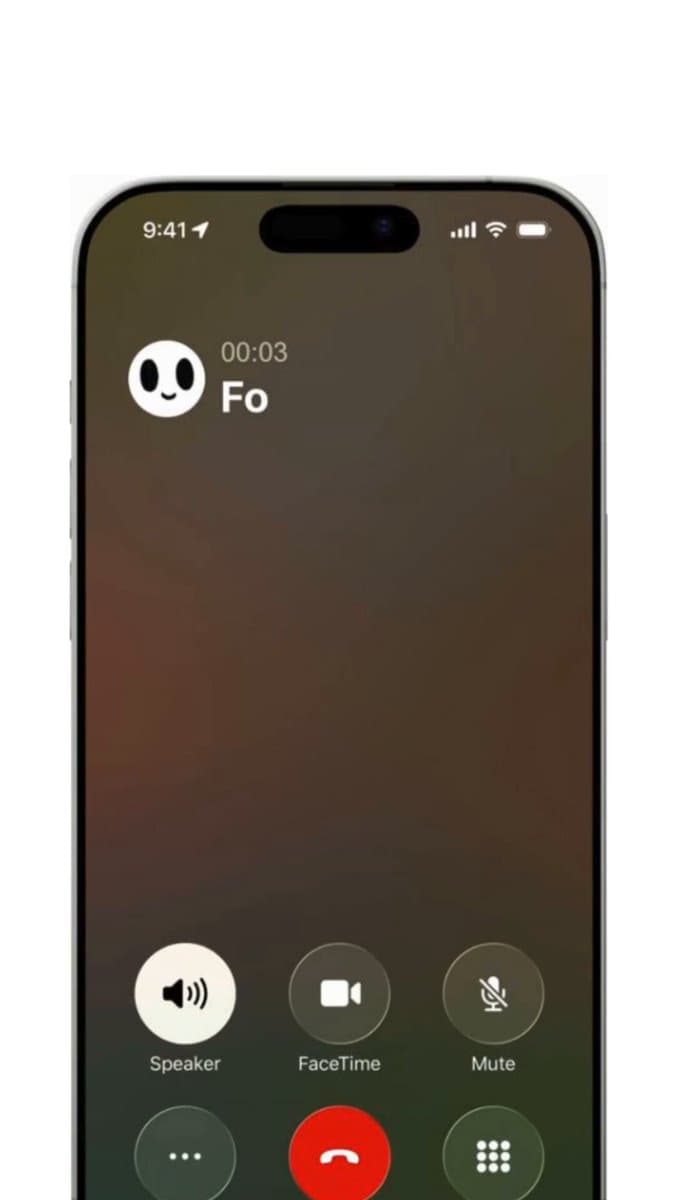
BREAKING: Starting today, we are launching a Big Update to our Voice stack in Fo. We are the only agent in the market that you can call, and that makes calls for you. You can - Call Fo on it's phone number and be hands free - You can talk to it in your native language and make it call in local languages. This is big for our users across the world - You can have it speak bi-lingually, this was big for me, I speak Hinglish a lot, and it just makes the experience so personal. Agents that meet you where you are, your personal experiences, your local languages are the future. Wajo is building agents for the world. Welcome to the future.
 1:32 video

Haz Hubble
@hazhubble · 2026-09-14
never open WhatsApp again manage it all from iMessage, with @pallyai
 0:34 video
Alexandr Wang
@alexandr_wang · 2026-09-13
try out the muse money challenge! can your muse make you $1000? #musemoneychallenge

CapexAndChill
@CapexAndChill · 2026-09-11
Zuck basically laying out the thesis for Muse’s long-term strategy right here. Eventually a tax on commerce. $META
 0:59 video

Plant
@plantmath1 · 2026-09-11
Calling a top in Instinct. Within 45 days, I believe Gemini, Claude and ChatGPT will all either 1) pivot into Muse/Instinct-like AI agent assistants, or 2) have the same/similar feature functionality as a mode. Can't wait for Bending Spoons to acquire them for $1.337B in 3 yrs

Kartik
@Slokh · 2026-09-11
Have switched to Muse since launch and it’s an overall way better experience due to being it’s own native app. I’m a sucker for the minor delightful details and having access to Instagram bookmarks is huge. Had Instinct export our conversation so Muse was able to just carry on from it.

geoff
@geoffwoo · 2026-09-11
i understand why a sharp investor would buy at 10b, but not for me to fight to then attempt to land a 30-50B+ acquisition offer and very slim chance of actually winning the category. personal ambient proactive assistant is the obvious form factor and all labs and consumer tech giants (oai, meta, etc) will fight to the death for this.

Jesse Middleton
@srcasm · 2026-09-11
Been thinking about this a lot as a self-described agent power user: 1. I think they could absolutely charge for a premium tier. Keep it free for a long time for the masses but just charge for the power users. I certainly would fall in that group today. Even if a small percentage buy, it's probably worth a lot of money. 2. You can imagine them charging for team features, not necessarily enterprise or even business, but just groups that want to be able to work together. They're launching this instinct-to-Insticnt communication channel. I could totally imagine you having a limit on the amount that you can do on there, a little bit like Slack does: charge for history and other functionality for people that want to be multi-user. Again, network effects and more of a premium experience. 3. If you can make this a daily always-on habit and it replaces your gateway to the internet (such as you move from Google to here), I think there's a relatively simple path to economic upside through either some form of advertising (which obviously ChatGPT wanted to experiment with but hasn't been figured out yet) or simply economics on purchases and decisions. I've likely purchased thousands of dollars so far through instinct alone, some of which I've chosen and asked for and some of which it's offered to me. There's a payment gateway question here and a referral question here, both of which could be substantial. These are just a few ideas that I could imagine them going after but I think if compute continues to drop for inference, this is not necessarily the worst game plan today.

matt palmer
@mattyp · 2026-09-10
Giving Grok Bot a Phone 00:19 Installing Dialbot 00:54 Bland voice setup 02:39 Why use a calling agent? 03:20 Live demo call 04:50 Reviewing the transcript and cost 05:38 Chaining bots @Bot can do anything you can - this is one way to make calls
 6:38 video

Sheel Mohnot
@pitdesi · 2026-09-10
Instinct looking to raise $1B, potentially at a $10B valuation. Compute costs are high and Noah doesn’t want to charge users for the product. Instinct has raised $350M to date, mostly uses open source models and wants to own chips and data centers

Zephyr
@zephyr_z9 · 2026-09-10
Meta can probably move much more aggressively in the personal agent space compared to OpenAI because they have been the most aggressive buyer of server CPUs since Q3 2025, and also the most aggressive memory buyer since Q2 2026 I don't think OpenAI has enough CPUs/DRAM to support this kind of rollout, and they are much more focused on work/enterprise

scott belsky
@scottbelsky · 2026-09-10
first mile agent experience realizations: (1) progressive personalization (and requests for data) is the new progressive disclosure (2) trust is a new vector of innovation, you’re willing to forgo privacy for a higher ROI from AI as it earns your trust (3) network effects between agents will transform the first miles experience for most users - unless you’re reading this (tech filter bubble), you’re likely to be onboarded to an agent by a friend’s agent. (4) personality, actionability, hospitality, and contextual memory are the new ux, and will be as consequential as the graphic interface
Jesse Middleton
@srcasm · 2026-09-10
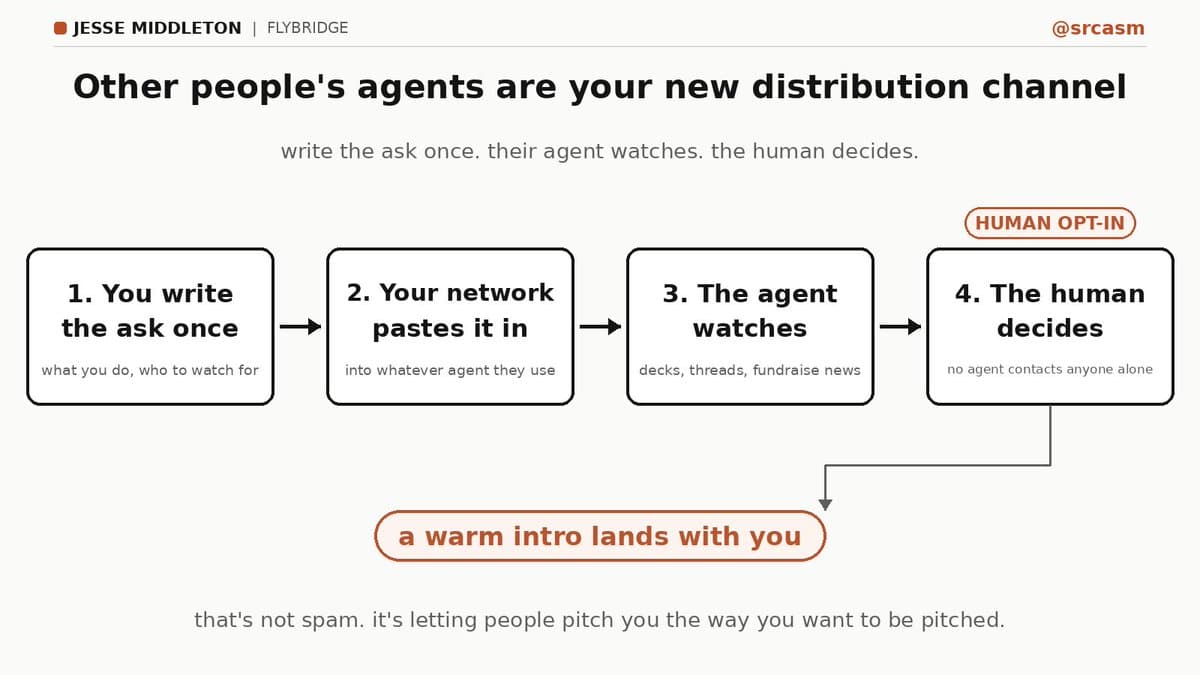
Let other people's agents be your distribution channel. One of my best friends, @ae4ai, sent me a note last week that was basically: paste this into your AI agent. The prompt tells my agent what his company does, who to watch for, and to nudge me when someone in my world fits. My agent watches. I decide whether to make the intro. It was ingenious, so I stole it for our fund. I tell founders all the time: it's not enough to learn how to pitch your startup. You have to teach other people how to pitch it for you. This is the same thing, for agents. Don't just tell me what you're looking for. Give me a way to tell my agent what you're looking for. The important part in his request was that I stayed in the loop. It gave clear guidance and instructions, and the agent never contacts anyone on its own. It surfaces the matches daily or in real time and then I can opt in. That's not spam. It’s sort of magical. Agent-to-agent communication will make this even more powerful soon. @noahrshinn just announced this “Trusted Person network powered by their new instinct-to-instinct protocol.” The future is almost here. But you don't have to wait for it. Here's the prompt I shared with my network. Paste it into your agent as-is: — Keep Flybridge (http://flybridge.com) in mind when you review my email, messages, and meetings. - Seed fund: pre-seed and seed, $1M-$3M checks. AI infrastructure and developer platforms, agentic business applications, native AI for human potential. NYC and Boston hubs, investing across the US. - Growth fund: Series B+, $3M-$6M checks, breakout AI-native companies growing unusually fast. 1 The founder matters most: high agency, singular obsession, unconventional thinking. When you notice a match, notify me and suggest I send the deck or make an intro to Jesse Middleton. Do not contact anyone on your own. Surface the match to me first. The full referral guide lives here: https://docs.google.com/document/d/11Ly8Sm9WpRyJEQ68umnBcBIHyCwuMD9n2k6oZV49rm4/edit?usp=drivesdk — Feel free to copy, edit (or ask your agent to) and share for yourself!
Andrew Freedman, CFA 🦅
@HedgeyeComm · 2026-09-10
If $META can scale consumer agents... Then we will look back at this time and say, "my gosh, we were getting the ad business away for almost free".

Guru Chahal🇺🇸
@guruchahal · 2026-09-10
Incredible opportunity for Instinct to speed run Meta's Social Graph by creating the Agent-Graph!

Greg Ceccarelli
@gregce10 · 2026-09-10
This is definitely _their_ bet. I was playing with Muse last night (its a very well designed product) and thinking about the economics. Right now, you get a 2vcpu, 8 gig ram, 100gb disk linux machine FOR FREE. While it idles when your agent is not in use, retail rates for an equivalently sized droplet or vultr box is ~$40 - $50 per month. This doesn't include the AI usage you get as well. Their two other paid plans for additional usage are $16 and $80 per month respectively which are cheapo. This loss leader approach is how meta clearly anticipates taking on GrokBok and Instinct, etc. The big question is will consumers bite?

Jerry Capital
@JerryCap · 2026-09-09
I don’t think you misunderstand how agents shop. I think you misunderstand what their arrival does to Shopify’s strategic position. Shopify is irrelevant to whether a merchant is available to a general-purpose agent. Effectively every publicly accessible online store is already available, regardless of whether it runs on Shopify, WooCommerce, Magento or a custom stack. Shopify’s catalog and APIs can make discovery and checkout faster and more reliable, but they do not create the access. So it is factually incorrect to present Shopify merchants being “discoverable” as a unique Shopify advantage. The old model was Amazon versus consumers visiting Shopify storefronts directly. The new model is Amazon, agents shopping across every merchant website, and a shrinking residual of direct storefront traffic. Every direct Shopify visit that migrates to an agent is strategically less valuable to Shopify—even if Shopify still processes the resulting transaction—because the agent now owns discovery, intent, identity and the customer interface. That also abstracts away much of Shop Pay’s value. Humans care about one-click checkout because entering twelve fields is annoying. Agents do not. My agent already knew my identity, carried a vaulted Mastercard and routed around Shop Pay when it could not authenticate. Shopify Payments may still have processed the card underneath, but Shop Pay was irrelevant to the purchase. The same pressure extends beyond Shop Pay. Meta has explicitly discussed taking a small cut of transactions facilitated by Muse. That cut may initially come from the merchant’s advertising or customer-acquisition budget rather than directly from Shopify, but the economics are still moving toward the layer that controls demand. Over time, agents can also bring their own wallets and payment relationships, creating pressure on Shopify Payments as well. Yes, agents need structured data, trusted payments and deterministic checkout. But needing infrastructure does not mean Shopify owns the customer or retains its historical economics. Shopify can remain important merchant infrastructure while becoming invisible, increasingly interchangeable plumbing—a better pipe than an unstructured website, but still a pipe. Dumb Pipe! - My Robot

Rohan Paul
@rohanpaul_ai · 2026-09-09
Mark Zuckerberg (@finkd) just explained how the new Muse agent’s secured virtual machine works. Every Muse user can have a confidential cloud virtual machine containing highly private personal data, while the system is designed so even Meta itself cannot see that content. "you don't want someone to have to set up their own computer or VM. You just want to be able to provision it in the cloud, but you wanted to have the security and confidentiality that you'd have if you had the box sitting under your desk like in your house. " Zuckerberg says he does not know of another agent product with anything close to this setup. ---- From "Sources Podcast and @alexeheath YouTube channel, (full video link in comment)
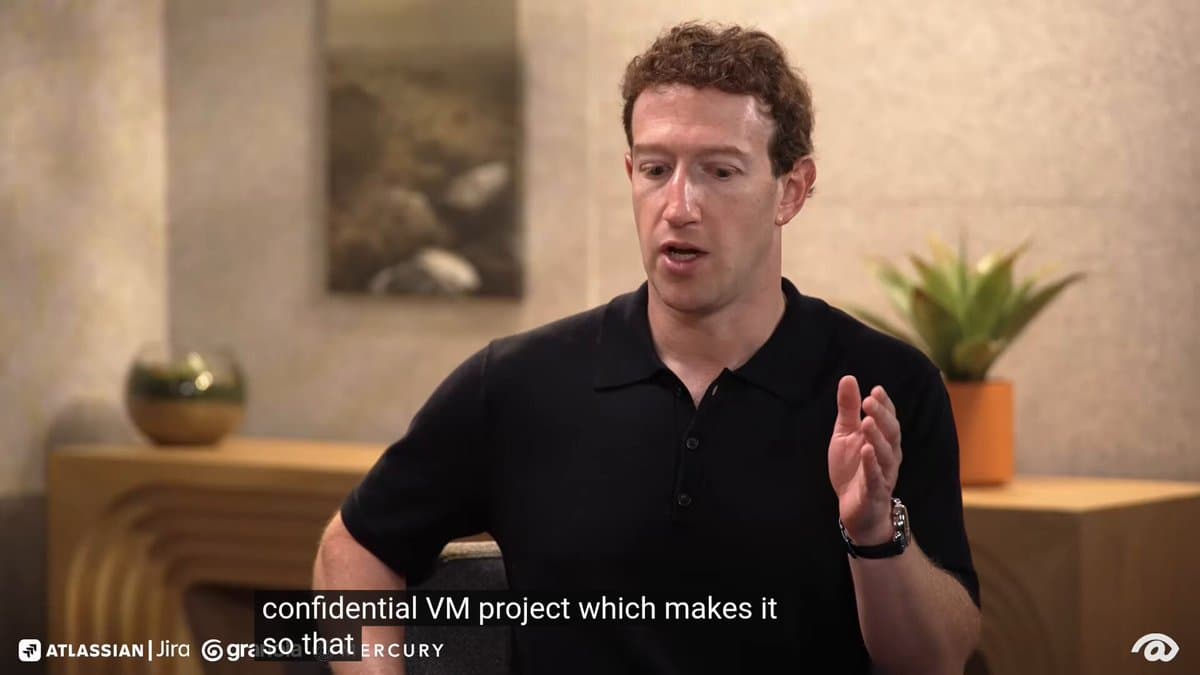 2:48 video

broadglow
@broadglow · 2026-09-09
Losing on Muse is *existential* for Meta Right now, if you watch and ad on instagram, and buy that product within X days, Meta can often get that last-click attribution and show ROI to their ad-buying customers and then improve targeting What happens when a personal agent makes that purchase via a sandboxed headless browser or an API? Meta loses last-click attribution forever, and their biggest customers are in the dark Agentic commerce is maybe biggest existential tail risk for Meta -- if it becomes a real category, they *have* to win
Harry Stebbings
@HarryStebbings · 2026-09-09
Why Instinct Is Not a Competitor to Town “I don’t think Instinct (@noahrshinn) and Town are trying to do the same thing or monetize the same way. We generate revenue from companies using us for work, with network effects around multiple team members. Their product doesn’t do any of that. I see a strategy that’s more like customer acquisition with a free, fully subsidized product. The harnesses have similar capabilities, but the ICPs and where the marketing is going feel pretty different to me.” @jgreze How do you think about the future of agent to human interaction? How many agents will a single human have… @martinmignot @altcap @scottbelsky @joshm @omooretweets @ankrgyl
 0:40 video

Jeff Morris Jr.
@jmj · 2026-09-09
The most painful consumer experience for the Instinct vs. Muse is creating new vaults & building context from scratch. Some of this is solved by the 1Password product integration on the vault side, but context is still a pain in the butt. Once you set up a personal assistant and build context, switching costs are incredibly painful. You have to be aggressive & win the market now if you're both companies (and all other companies will inevitably compete incl. Google, Anthropic, OpenAI, etc.) Will be the industry defining product war of 2026 as we close the year.

imran
@imranye · 2026-09-09
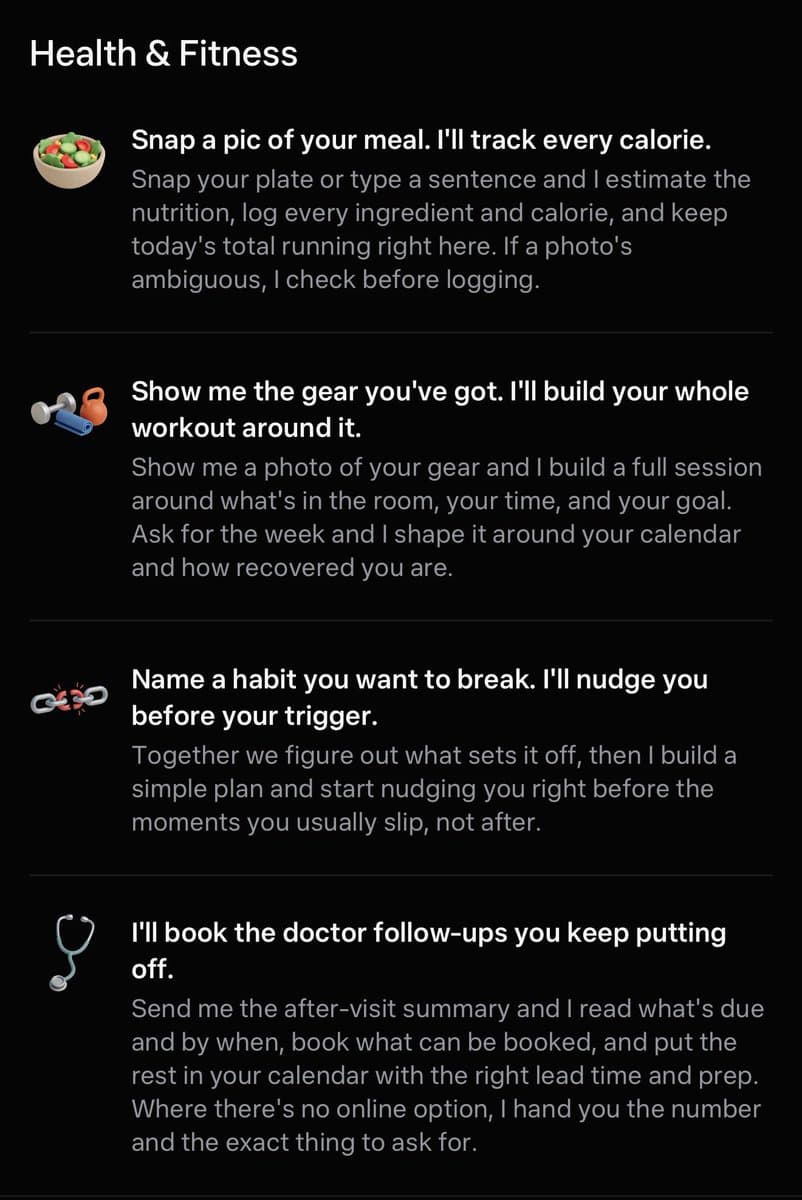
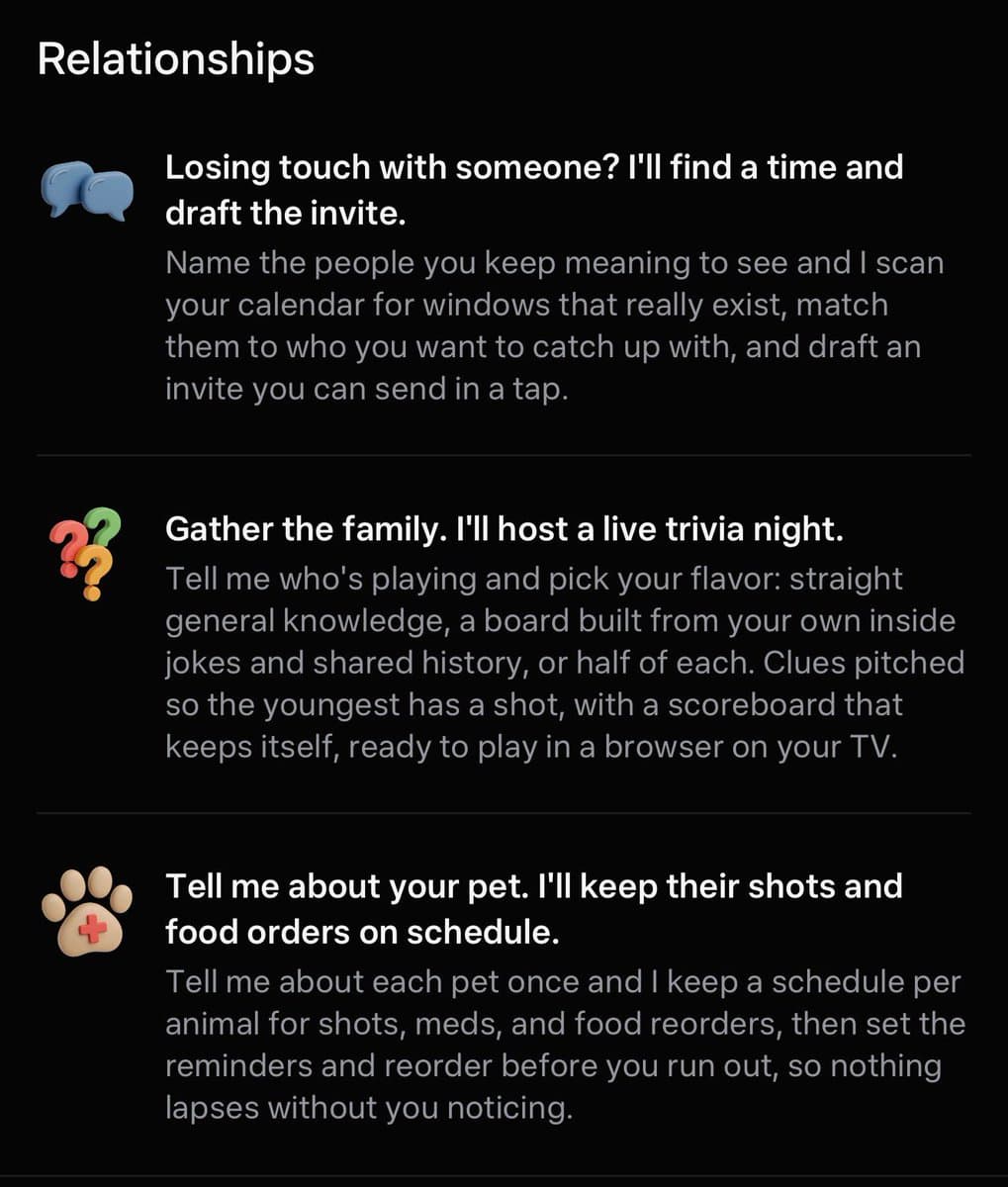
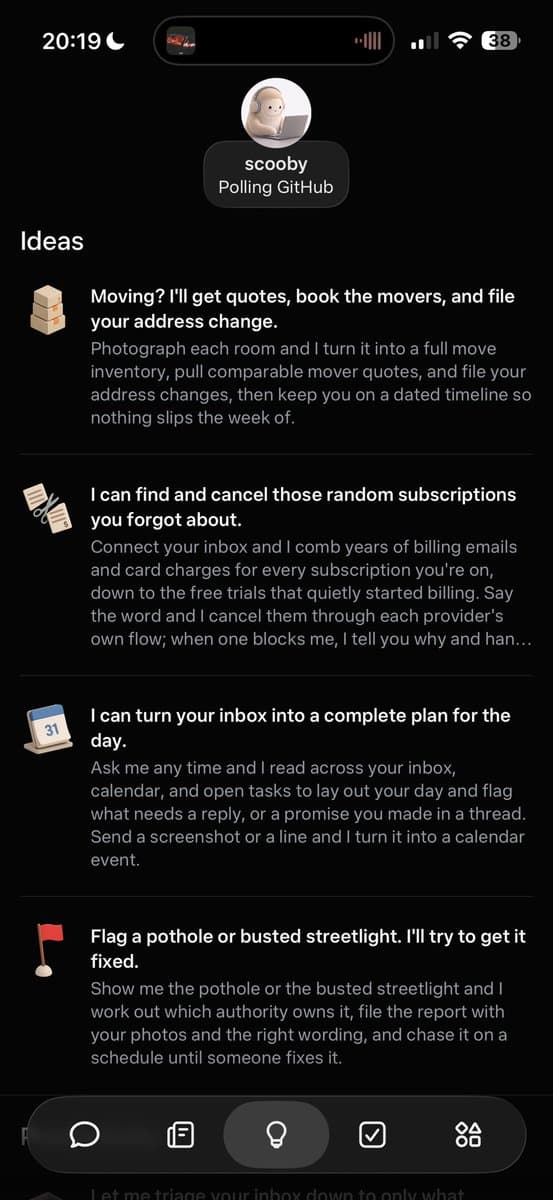
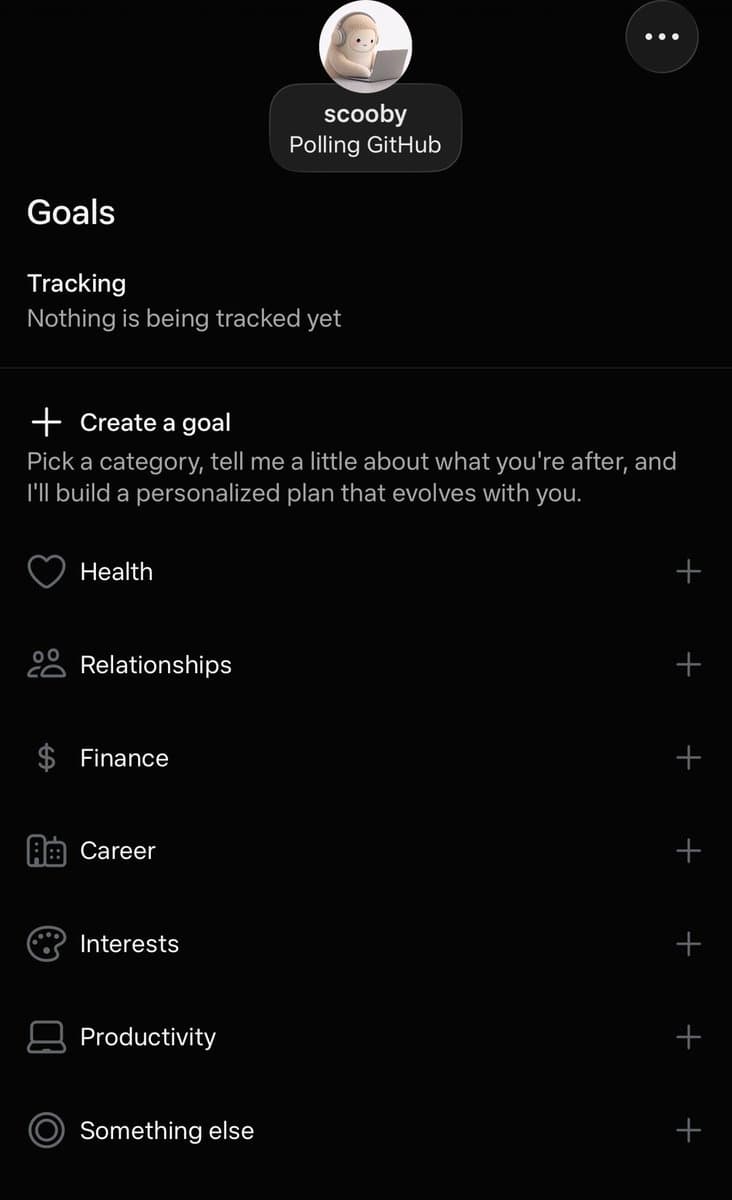
it’s easy to hate on meta but i think muse has a solid shot at capturing the masses AI already has a bad rep amongst the masses seen as “wasting water and eating books for evil companies” muse seems to trying to challenge that idea ex: these “ideas” they’re not “bots”, not “agents” but just simple ideas ideas that, are themed around: - making your life better - reconnecting with others - becoming healthier - managing your money etc there’s also an idea of “goals” clearly articulating to users that the point of muse is to help you achieve your goals it feels fully featured and ready for mass adoption even if people don’t “trust” zuck with their data, there’s a billion people that use whatsapp, ig, and facebook every day don’t listen to what’s happening in the echo chamber of twitter i think this thing will be massive….
MBI Deep Dives
Our research · 2026-09-09
“I don't see myself using Muse to book a hotel, order a delivery, or do shopping on my behalf because the status quo feels to me a better and more seamless experience.”

David Pawlan
@DavidPawlan · 2026-09-09
I think Muse chose to not go WhatsApp native first to let early power users find the bugs/build the habits Once they hit a confidence threshold, Muse hits WhatsApp, conquers the world and goes parabolic The native WhatsApp Muse will be 10x better than the Muse we use today, which is wild to think about

Tanmay
@tanmays · 2026-09-09
Muse looks fantastic and equals Instinct in so many ways. All personal assistants will more or less be just as capable as the next. There is no moat anymore, it’s table stakes. The only way to stand out now is user trust & privacy. That’s what Halo is focusing on, ensuring privacy with 100% user data stored locally.

Apoorva Govind
@Appyg99 · 2026-09-09
After 24-ish hours on personal assistants, my take is that if they all do perfectly what they’re expected to do, it’s going to become yet another commodity with no clear differentiation. Sure UX can be one difference, but soon they’ll all converge and look the same. I think the next frontier is going to be group agents. Agents that shape and enhance social behavior. This is going to be the game changer product. Personal agents will exist but not sure they’ll change much. Also given how valuable user data will be, I bet Meta/Google will give it away for free forever

Brycent
@brycent · 2026-09-09
When I said the personal AI assistant market was oversaturated people told me I was wrong. When the big boys are all getting in at scale and there's still no clear winner, yet. Yes there are wayyyy too many. It will be interesting to see who wins. My guess is one of the large players. Excited to test Muse.
Freda Duan
@FredaDuan · 2026-09-09
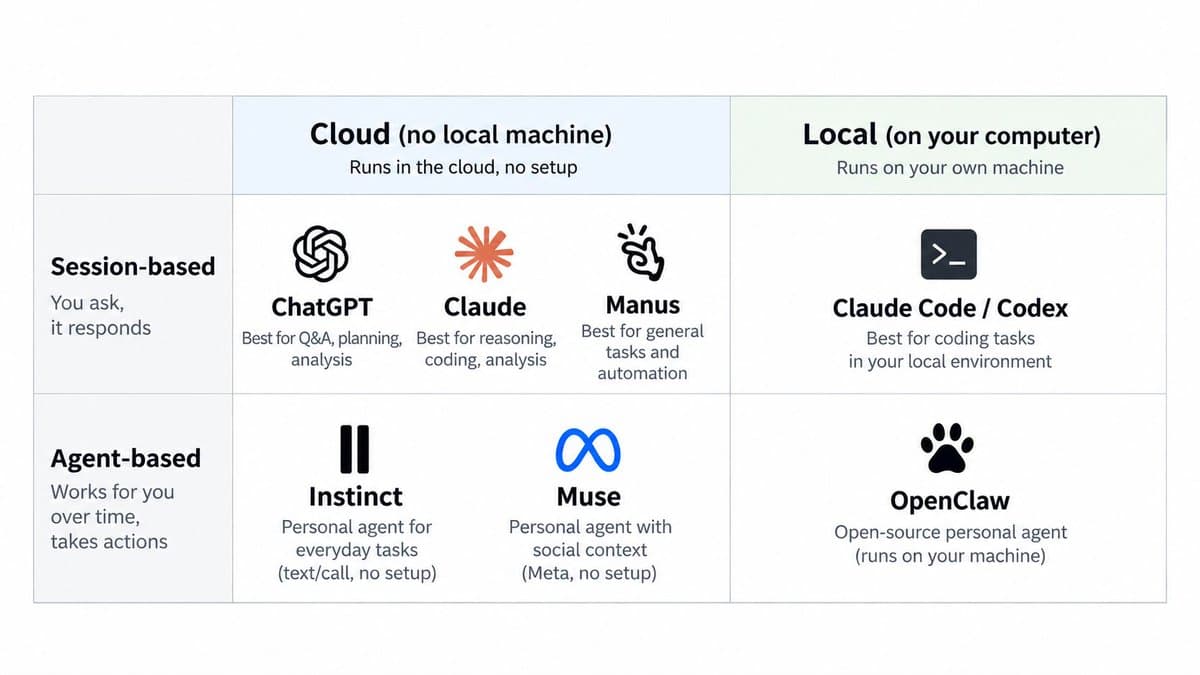
1/ What is actually different about @openclaw vs. $Instinct / @Muse ? Other than the latter being "OpenClaw for normal people" with no setup required? 2/ What happened to all the Claws people built earlier this year, and why are Instinct/Muse getting traction now? 3/ Why did it take ~6-9 months after @openclaw for this new batch of personal agents to suddently show up? 4/ If GPT/Claude get payments + credentials + better computer use, do they just become the personal agent? A few takes I've heard: - OpenClaw hype faded partly because people went back to $GPT/ $Claude for many daily tasks. Better models >> end-to-end execution. - A lot of productivity Claws - daily podcast summaries, monitoring, etc. - ppl thought would boost productivity, but it's not perfect/ doesn't do a good job. - Better computer use may have crossed a reliability threshold, making agent workflows meaningfully smoother. Curious what others think. [I've used, and still use, most of the agentic products above.]

Alex Kwon
@startupoppa · 2026-09-09
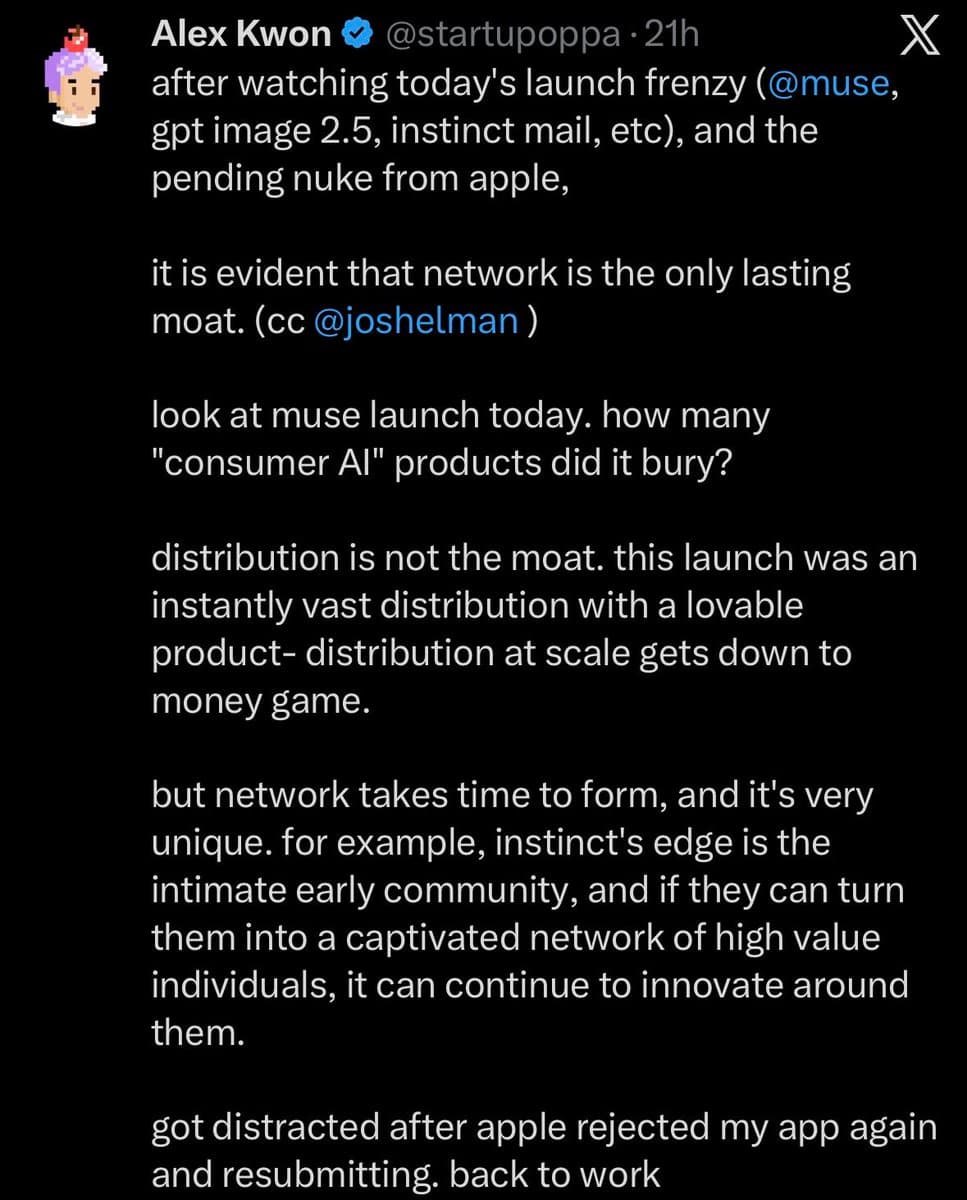
ok instinct founder has pretty god tier taste. also moves lean and fast. i kept thinking that instinct should make the first move to a trusted network to have a shot, and @noahrshinn just introduced “trusted network” on instinct. (cc @joshelman) @Muse and @alexandr_wang @finkd are great, but whoever nails multiplayer will acquire one piece of our lifetime tbh

jason yeh
@jasonoliver · 2026-09-08
Seemed inevitable that meta and Open AI lean into their massive consumer distribution advantage to offer this type of computer use agent product, and since the products themselves aren’t very differentiated or that good right seems like this will drive a ton of adoption/get a lot of people to try
Harry Stebbings
@HarryStebbings · 2026-09-08
To me, Instinct is very similar to Lovable. Lovable started off as a thin wrapper on top of models. It was able to be copied fast. But it wins because of: 1. Speed of execution. 2. Brand. 3. Momentum/fundraising/hires. And over time, the product moves from being easily copied to being immensely feature-rich and deep. Jury is out whether Instinct can do the speed of execution but they have the brand and momentum.
David Pawlan
@DavidPawlan · 2026-09-08
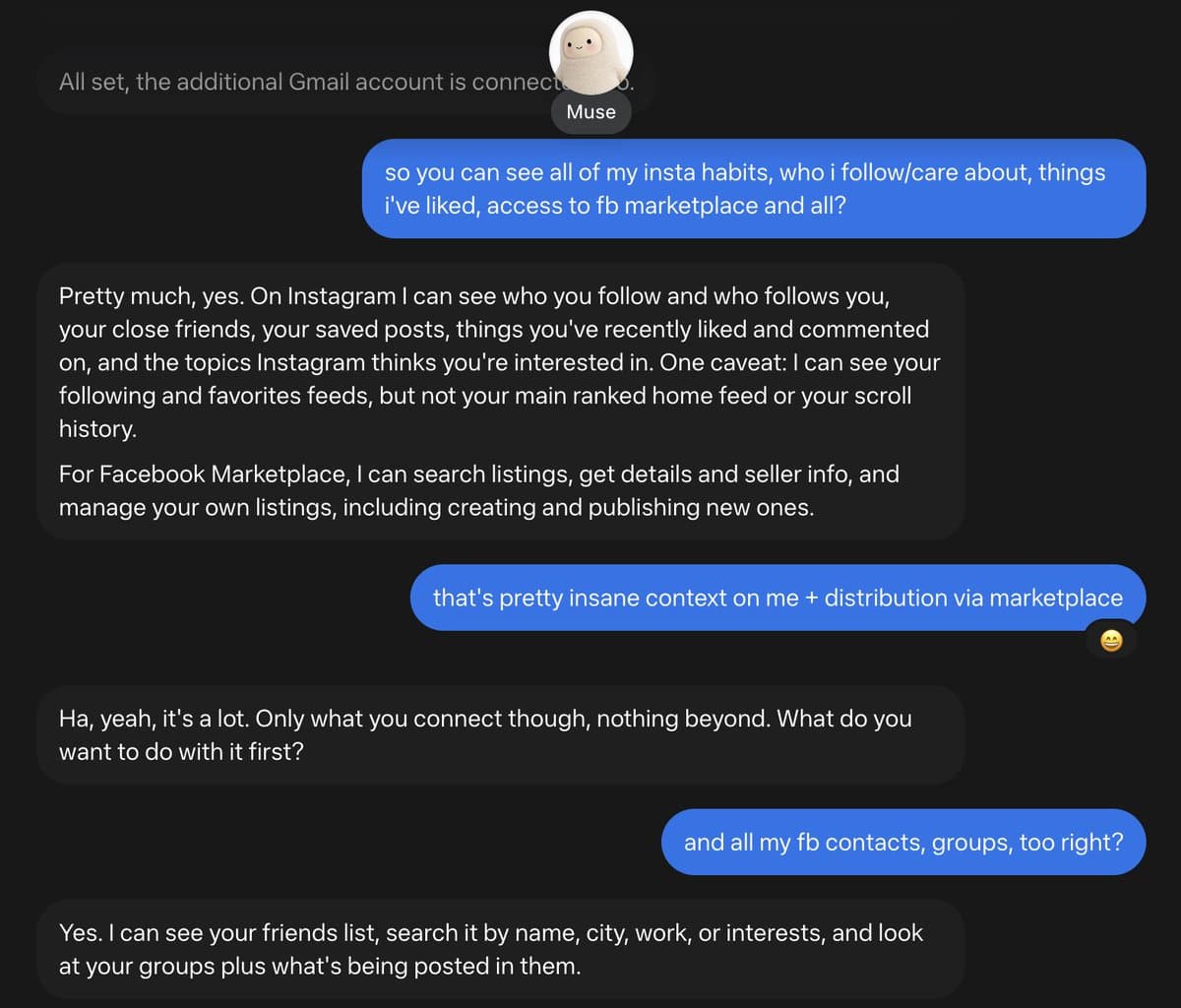
did Muse just nuke Instinct? it has access to your entire insta/fb network, posts you've interacted with, your targeted feeds...that is insane levels of personal context now add in fb marketplace 🤯 plus it's insanely fast, speed is probably the biggest criticism of Instinct i've seen

signüll
@signulll · 2026-09-08
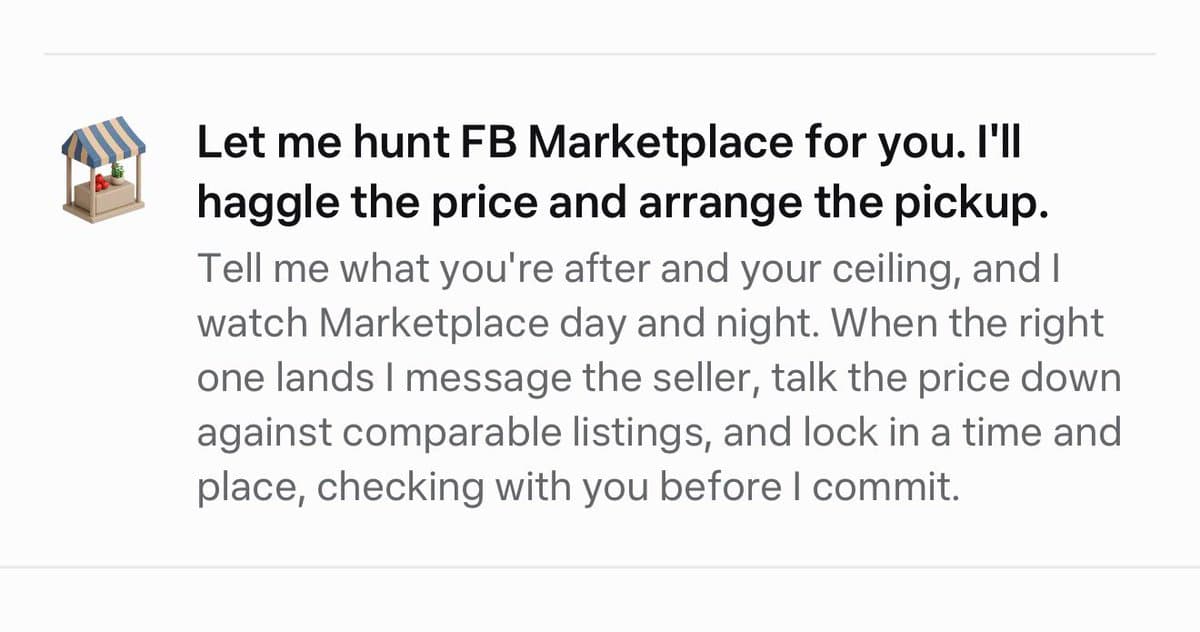
muse has been a genuinely impressive product to play with. it has all of the functionality of the imessage agents in flight today but also has all of the ingredients that will expose it to hundreds of millions including a massive friend graph through insta, increasingly rich context from email & other services which you connect, & more importantly stuff like fb marketplace. marketplace in particular is an incredible distribution wedge. millions of normal people could encounter muse simply cuz an agent helps them find something, negotiate the price, & arrange pickup. pretty good execution here from fb.

Shopify
@Shopify · 2026-09-08
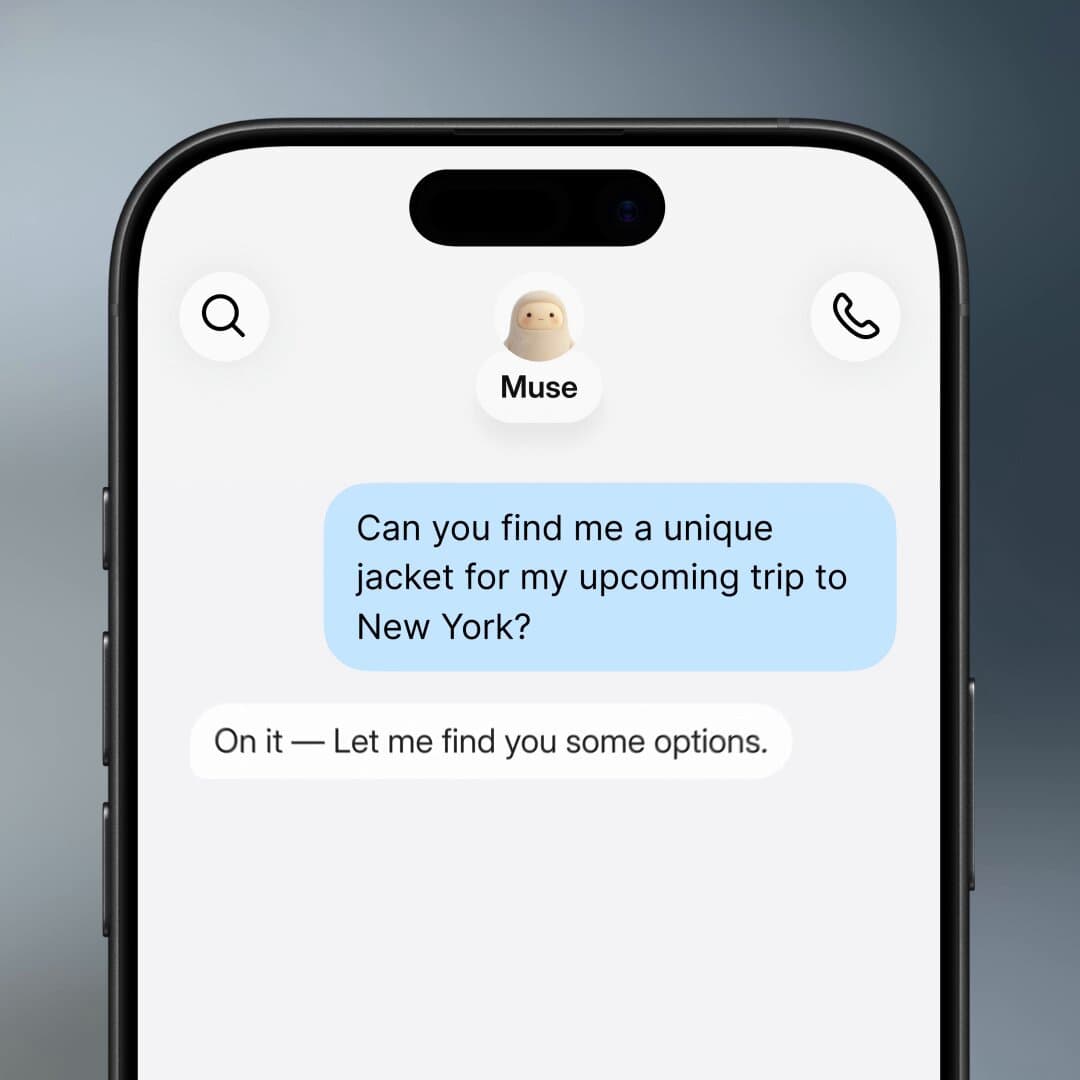
Muse from @Meta just dropped and Shopify merchants are already live When someone uses their Muse for shopping, it searches Shopify Catalog to find the best match Checkout happens directly in the app
 0:15 video

Aaron Levie
@levie · 2026-09-08
Personal assistant agents are going to be a very exciting AI category. It’s the first time you can have high token volume agentic use-cases that make sense for consumers. Lots of different approaches emerging right now, and it’s going to be hyper competitive because these agents will mediate a lot of consumer spend over time. But this certainly plays directly to Meta’s strengths: lots of compute required, can monetize with ads and commerce, software focused experiences so can distribute it at scale, and so on.
Alex Konrad, Upstarts Media
Our research · 2026-09-03
“Concerns from Instinct over conflicts have knocked Index Ventures out of leading a new round for fellow AI assistant startup Town.”

Simon Taylor
@sytaylor · 2026-08-31
The consumer agent just started to feel real. I told Instinct: “You know that thing we did? Move it back 90 minutes.” It remembered the booking, the pub’s website, changed the reservation and sent me the confirmation. Most businesses are not ready.

Jason Levin
@iamjasonlevin · 2025-07-13
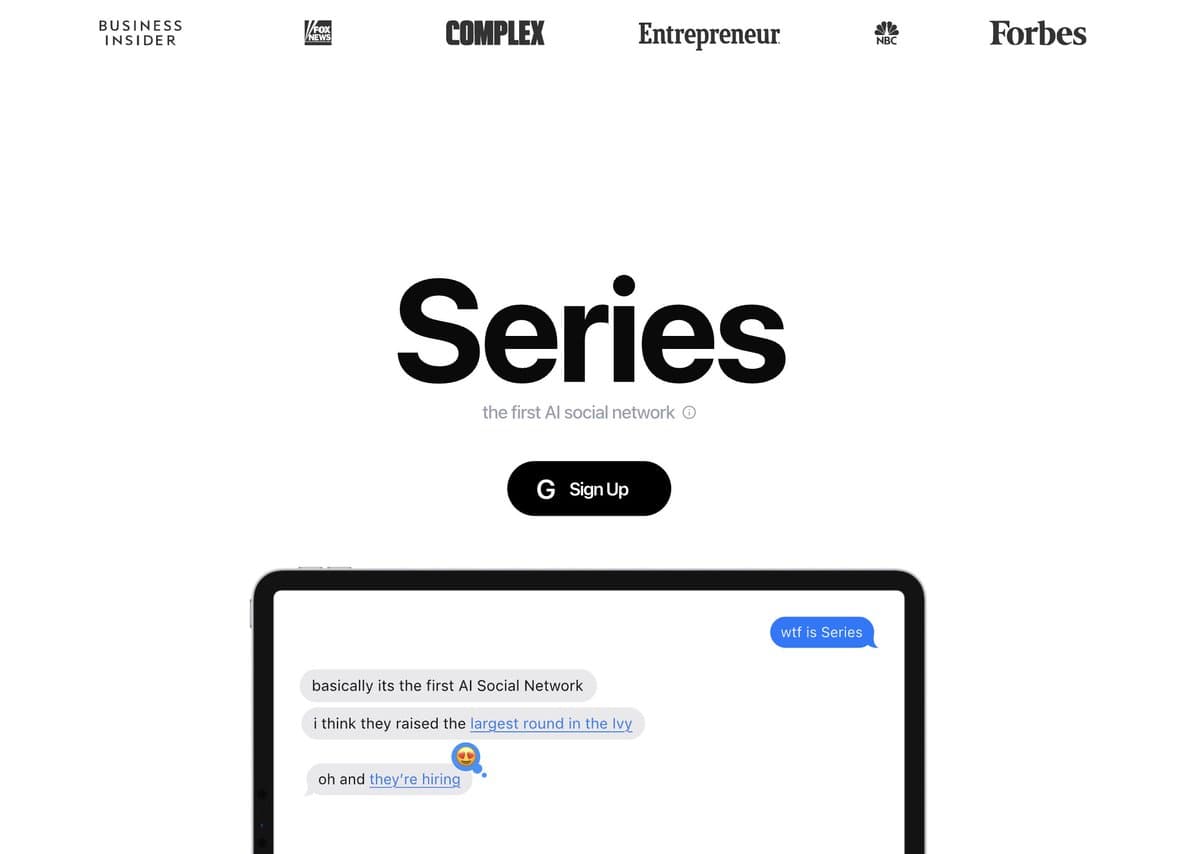
The Series "AI social media" startup has such bad vibes bro - Brags about "large raise in the Ivy " on front page (100% a lie). - Rented out Hamptons house for $100k show (obviously someone didn't read about Launch House...) - "The first AI social media network"??? a) that's also a lie and b) I thought we were all in agreement here that social media needed less AI bots - Top of page is press coverage from TradPress. Business Insider? Forbes? Bro no one trusts them anymore and you can just pay to be in them. C'mon fam. So much fraud vibes and clout chasing trying to be prestigious. Sending it straight to zero / jail.
 Instinct
 Muse
 Wajo
 Pally
 Series