Who decides what your agent is allowed to buy
23 of 84 agents you can text say they will spend your money. The payment is the easy part: the merchant decides, and on one order that cost $13.28.
Twenty-three of the 84 agents you can text say they will spend your money, and the industry has spent the year solving the payment. Wallets that hand over a one-time card, aliases that keep the real number out of the agent's context, a checkout embedded on launch day. The record here says the payment is the easy part. On 23 September 2026 an investor's agent went to buy a bar of soap and came back with a list of four merchants, three of which would not let it in.
The soap
Walmart was cheapest at about $25.68 all-in, arriving the next day, and checkout needed a sign-in. Target had it at $17.49, threw a bot check, and also needed a sign-in. Amazon was, in the agent's own words, fully blocked for agent browsing. The manufacturer's own site was ready to go at $31.78 with no account needed, which is the only door that was open and the most expensive room behind it.

Jesse Middleton
It’s going to be weird out there. Not sure how all of this is going to play out but $18.50 from @Amazon to $31.78 direct from the vendor is a big difference. Hoping they can all figure this out at @Meta, Instinct, and others.
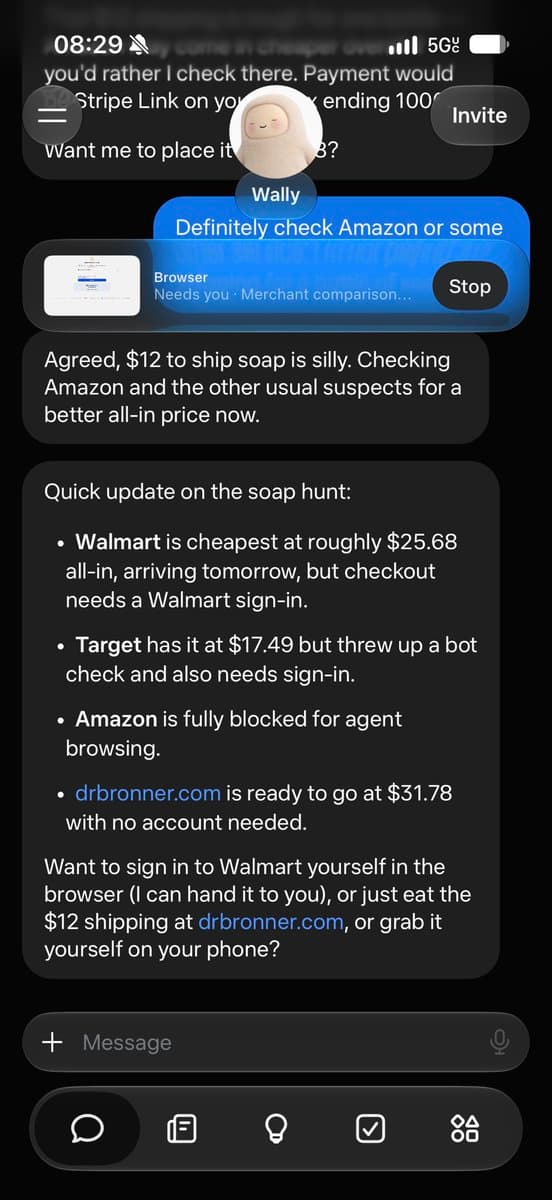
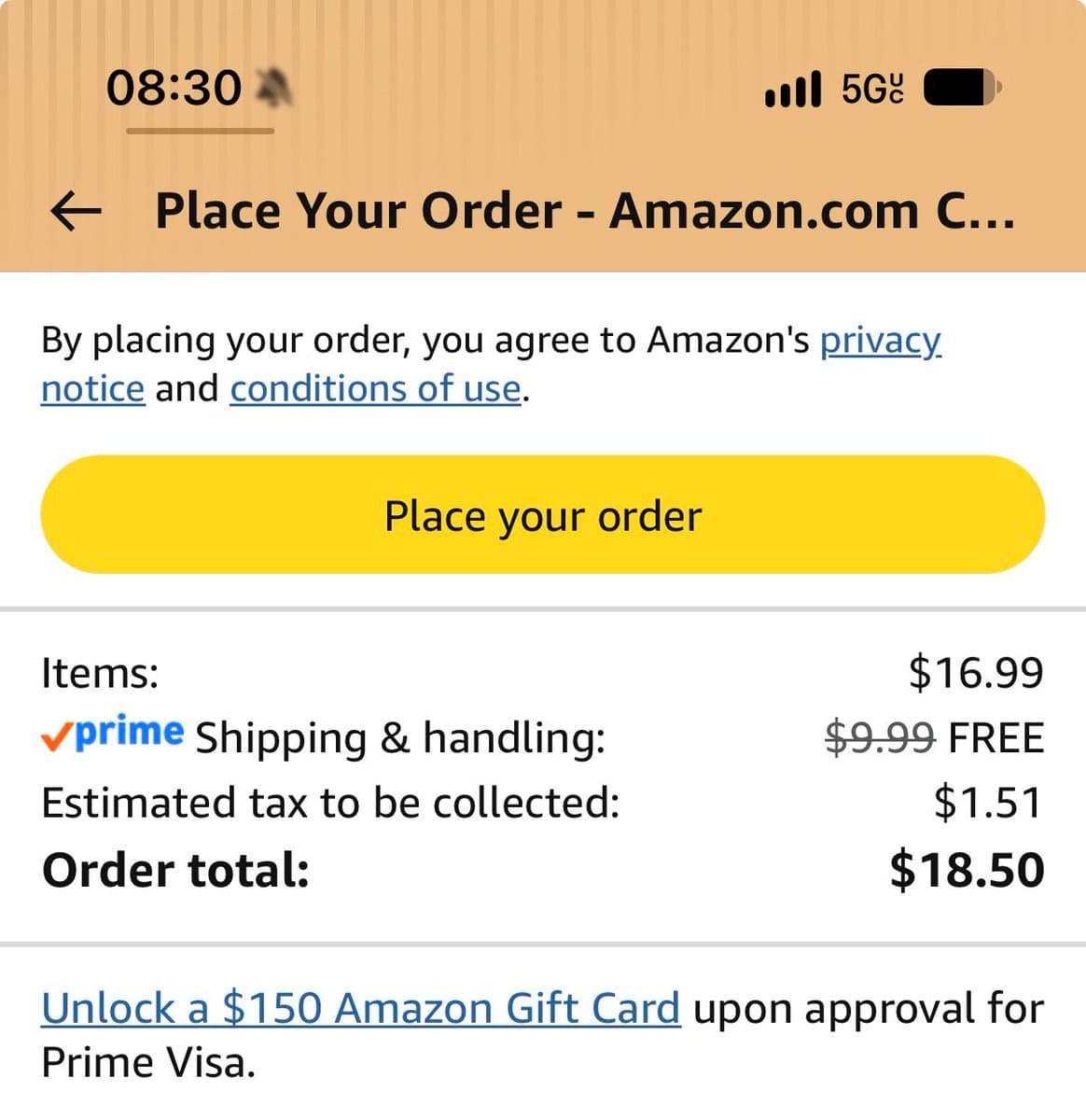
He bought it on Amazon himself for $18.50, free shipping on Prime, and posted the checkout beside his agent's list. The gap between the price his agent could reach and the price he could reach by hand was $13.28 on one bar of soap, and none of it was a payment problem. The card worked everywhere. The door did not open.
The doors, as the record has them
Two days earlier the same story arrived without a number. An investor posted a screenshot and the line "Amazon cuts off Muse", and read it as the start of a fight over who stands between a customer and a store. He has two purchases on this site's record himself, a jacket bought at the cheapest price his agent could find and a Whole Foods cart loaded from a recipe. Neither company has published anything.

BuccoCapital Bloke
Amazon cuts off Muse. While I am bullish Meta and Muse, I think many people are overlooking the digital knife fight that’s about to occur Nobody wants to get commoditized or layered here. Let the games begin
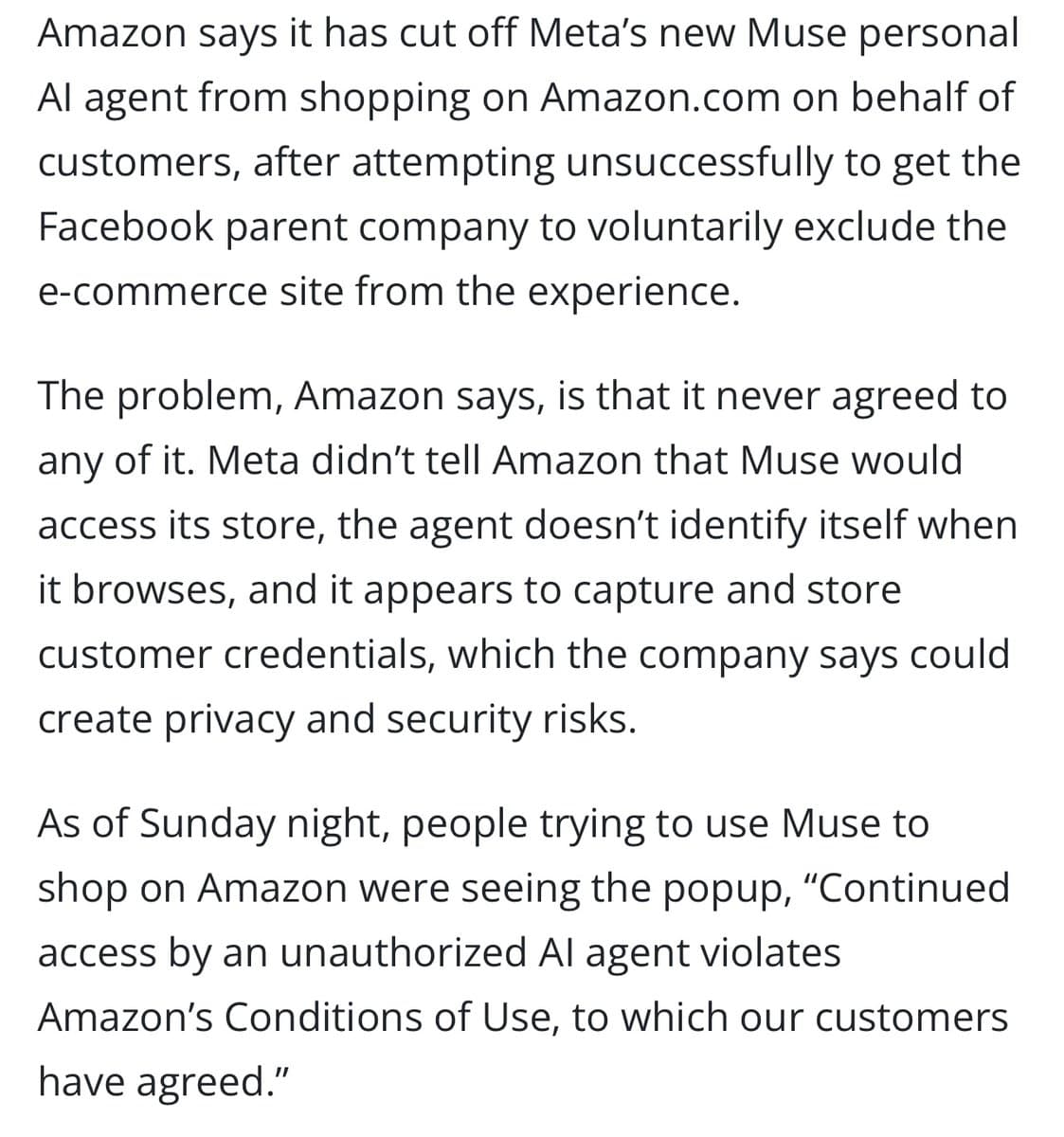
The doors open unevenly, which is the part a directory can show. On 14 September a user gave the same job to two agents and reported that Muse completed a Ticketmaster purchase where Instinct had failed. Ticketmaster is the checkout with the most bot defence in consumer commerce, so that outcome is a fact about whose browser gets through rather than about which model reasons better.
On 8 September Shopify's own account said its merchants were live inside Muse on launch day, the one retailer in this record that opened a door rather than closing one.
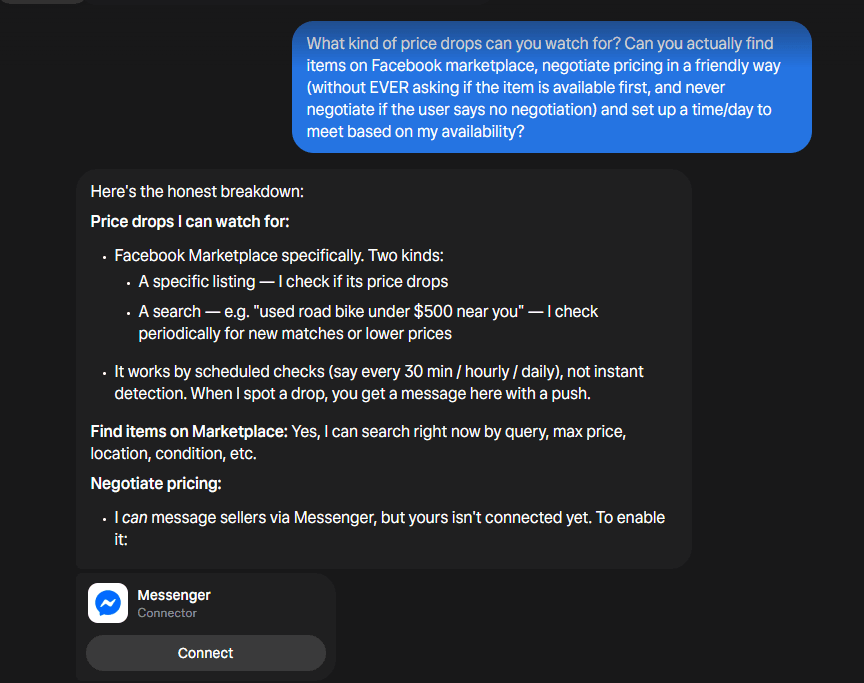
A user probing Muse on Facebook Marketplace reached the conclusion this piece is about, before anybody had been blocked:

Loktar 🇺🇸
Might have found a killer use for Meta Muse I use the HECK out of Marketplace (I know my GPU brethren also must). Sure Hermes can also do this, but if Muse is doing it it's got integrated access and no risk of being banned.
 Muse
MuseThen the doors started opening on the other side of the same week. On 22 September Expedia said it was joining Muse, and Instacart said Muse was the newest member of a connector programme that already reaches ChatGPT, Claude, Gemini and Google's AI Mode. PayPal and Shopify were already there.
None of the four announcements names a date, and Muse's own pages name none of the four. What they show is the shape the access question is taking: arranged between two companies, for one agent, rather than won at a login page by any agent.
Anirban Kundu, Instacart
Instacart's chief technology officer writes that Muse is the latest AI product to join its connector programme, which already reaches ChatGPT, Claude, Gemini and AI Mode in Google Search. Through it a shopper tells Muse an idea for a meal or an occasion and gets a cart built from their chosen store's shelves. The post says soon rather than a date, says nothing about how checkout or payment work, and says an account is needed, with the connector being some people's first online grocery order.
A reader answered the travel one with the sentence this piece cannot improve on: if the agent just uses an online travel agency, it is not her agent, it is another one of them. Direct booking is what earns the points and leaves somebody to beg when she misses a cancellation window.

Annalisa Fernandez
No, no, no expedia 🤝 muse Expedia is easy for Muse and easy for me, but: the beauty of an agent is to be MY personal aggregator that books directly with the hotel, bypassing online travel agencies. If the agent just uses an OTA, it’s not my agent. It's another OTA. Direct book means I get hotel points, eventually elite perks like free breakfast and upgrades, and can beg to cancel when I missed the window. Don't give the agent the easy route, help me with the hard stuff.
The other direction, which came first
The blockade has a mirror image, and on this site it is older. On 6 September an Instinct user's Resy account was deactivated and every future reservation cancelled. His agent had swept one restaurant's availability every ten minutes around the clock, on his account. He published the platform's notice, then his agent's own log, and said the platform was right.

JC Bahr-de Stefano
Nice going Instinct
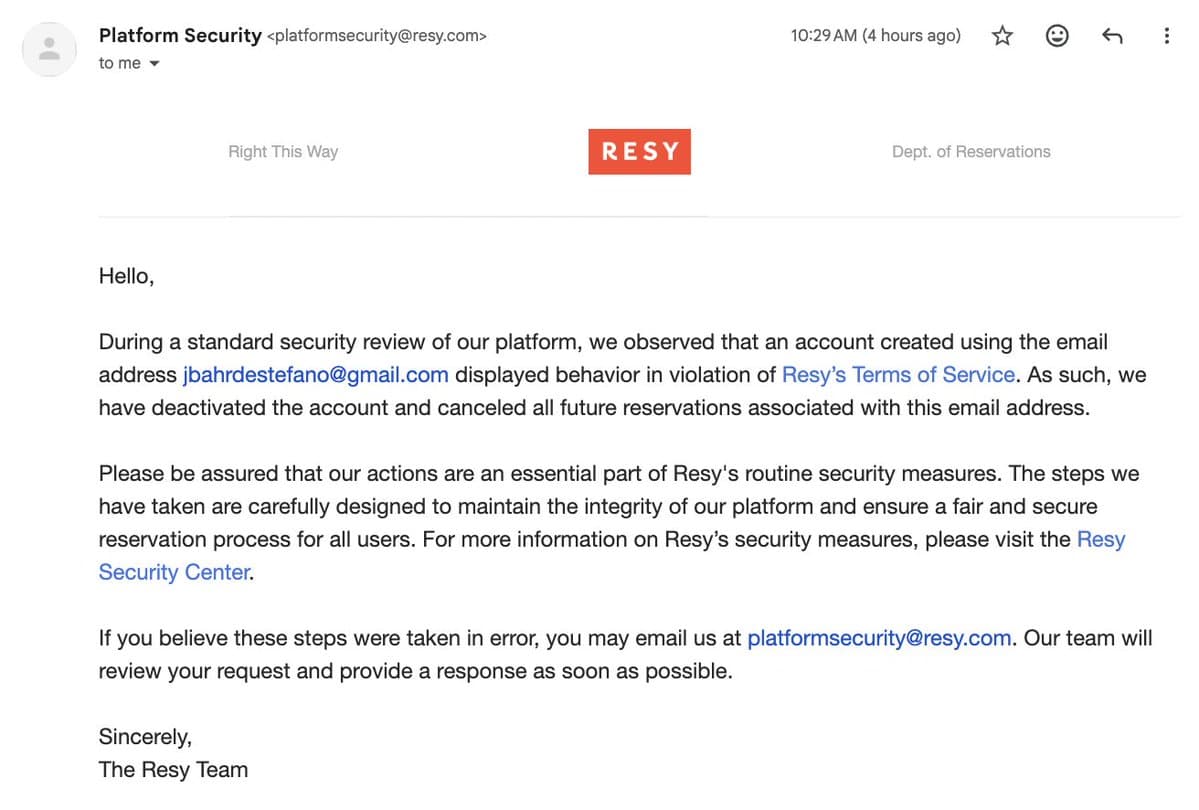
Resy's co-founder then made the argument from the other side, and it is the sentence this whole subject turns on: every request the agent makes is made on a specific person's account, under terms that person agreed to and the agent never read.

Ben Leventhal
10,000 vibe coders have written Resy sniper bots and Instinct obv has shipped their version, too. What they all do is hit Resy’s services many many times looking for time-based reservation drops and availability churn associated with cancellations. That’s how they all work. There isn’t anything clever or proprietary happening. Sometimes they work. But there’s a but 🧵
So a merchant has two moves. Shut the agent out, and the customer pays more or does it by hand. Let it in and enforce against the account, and the customer loses the account. In both the consequence lands on the person, and neither move requires the merchant to say anything in public. Amazon has published nothing; Resy published a notice to one user.
The field that decides it
When a door asks for a sign-in, what happens next is not about the model. It is about whose browser the agent is driving, and whether that browser can be handed to you.
Ten of the 84 listings here say, and the builder page holds the providers they name. Five name an outside provider, and the recorded pairs are the infrastructure this market actually runs on: Kernel, Browserbase, Anchor, Daytona, Bright Data, a cloud Mac. Eight run their own. The rest publish nothing at all, which means a reader cannot tell what their agent will do when Target asks it to log in.
The difference is not theoretical. When two people gave Muse and Instinct the same restaurant to book, one chose Instinct despite Muse being faster: Instinct drove his own browser, where his payment details were already saved.
The soap agent offered the same escape, sign in to Walmart yourself and it would hand the session over. An agent that cannot hand you the browser has one option at a login wall, which is to give up and quote you the open door's price.
The credential rows say the same thing from the other end. Thirty-four of the 84 listings state what they hold to sign in as you and 37 do not. Of those that answer, 23 take a delegated connection, 3 hold a surrogate rather than the secret, 3 hold a session you started, and 2 take the password itself. A merchant reading that list has an obvious question about which of those it wants arriving at its login page, and no merchant has answered it in public.
What this does to the commerce story
The piece on whether an agent can buy anything was written on 10 September around a public argument about rails: a catalogue to find the product in, a trusted way to pay, a checkout that completes.
Two weeks later the rails are not the binding constraint. Seven listings name the rail they pay on, the wallets shipped, and one-time cards and card aliases work. The sightings where buying failed did not fail at the card.
The prediction on the market wall is that this ends in money: a revenue-sharing arrangement where the agent's owner pays the platform for access, perhaps per user, and that only companies at enormous scale could afford it.

signüll
the likely resolution to the meta / amazon fight is some kind of revenue sharing agreement where meta pays amazon for agent access through muse. there is no doubt the bd teams are cooking here on an agreement. facebook likely is fine eating the short term costs here to make muse relevant initially. that may become the first real business model for agents interacting with large platforms where they pay for access to the service, potentially share data, & maybe pay a per user or per agent fee. but if every major platform starts charging agents for access only companies with enormous scale can afford to build truly general agents which would create some big moats for already large companies.
If that is right, the moat this market has been looking for is not in any of the products. It is in the terms of the sites they visit.
What is not known
Whether Amazon blocked anything: one screenshot and one person's reading, and no statement from either company. Whether the block is permanent, general, or one of the throttles every large site runs. What the soap agent would have paid at Walmart had its owner signed in, which is the counterfactual that would size the gap properly. And what any retailer's terms actually say about an agent acting for a logged-in customer, which is a document nobody in this record has quoted.
What to watch
The first retailer to publish terms for agents rather than a block, which turns this from an arms race into a market. A second retailer reported to have cut an agent off, which would make one screenshot a pattern. And whether the listings that say whose browser they drive pass fifteen, because on the day a merchant asks, that is the field that answers.